
24 days in the The Middle Kingdom
We spent 24 days in China. Looking back, it feels both like the longest month of our lives and like a single blink. We arrived on August 5th, exhausted from weeks of preparation at home: emptying our house, saying goodbye to our pets, friends and family, handing over keys, selling the car. Then suddenly we were on the other side of the world.
China was our first stop, and it was the right choice. We wanted to begin our journey in a place that would shake us out of old habits, test our adaptability, and open our eyes. China did exactly that.
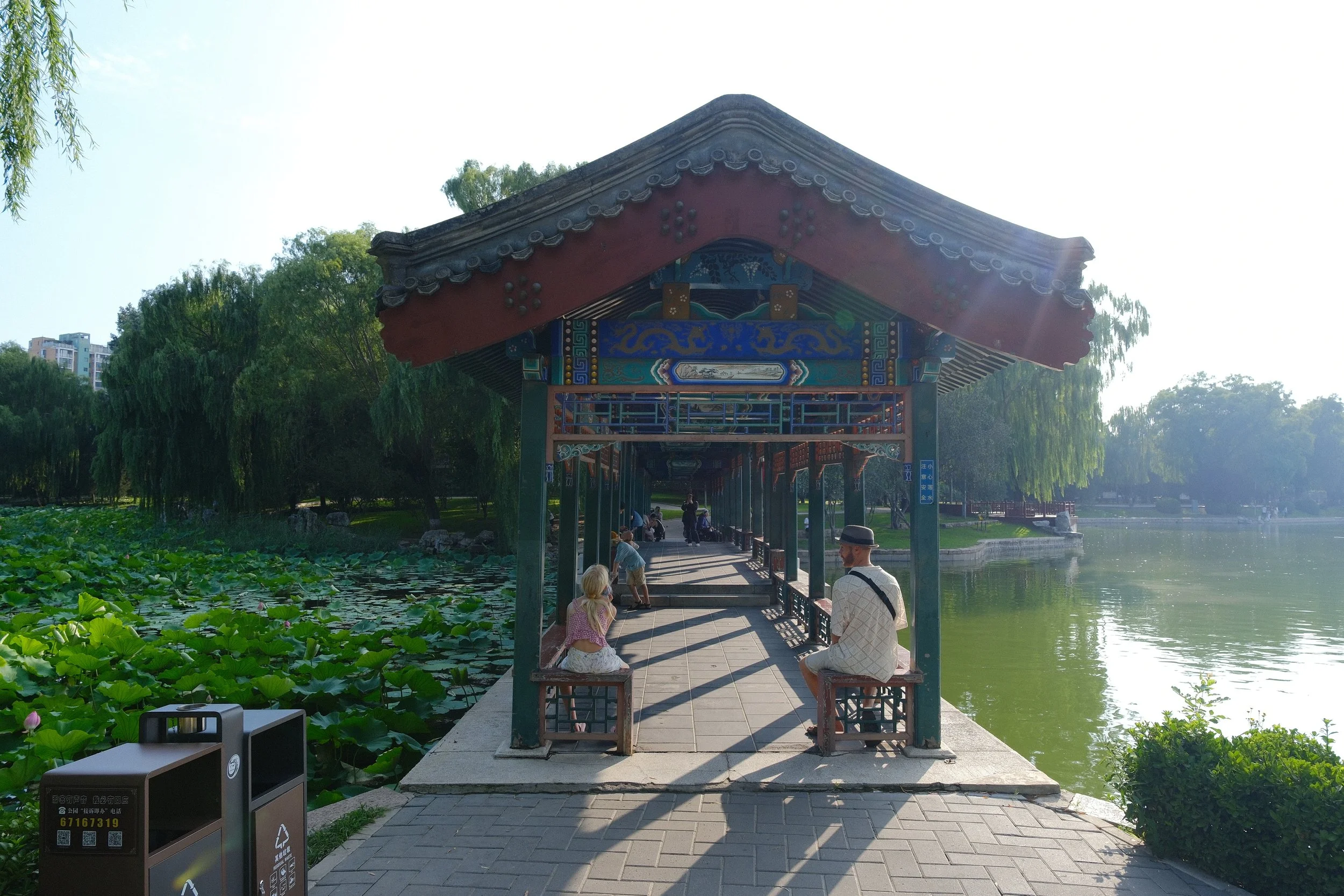
From our very first day in Beijing
Arriving in China
Entering China is no small thing. Even as Norwegians — one of the few nationalities allowed to visit for 30 days without a visa — the arrival was nerve-wracking. Long lines, detailed forms, thermal scanners checking for fever, guards everywhere, and strict rules: no filming, no noise, no hats. Hundreds of cameras watch every move. And then, suddenly, we were through, rolling our bags into Beijing. Relief, joy, excitement.
As foreigners, accommodation is regulated and strict in China. Staying in someone’s apartment, Airbnb-style, requires registering with the local police station, something we didn’t want to deal with with kids. So we kept it simple: hotels which handle registration automatically. (We booked through Booking.com or Trip.com). That made the whole month feel more like a holiday than everyday life, but maybe that was what we needed for a start.
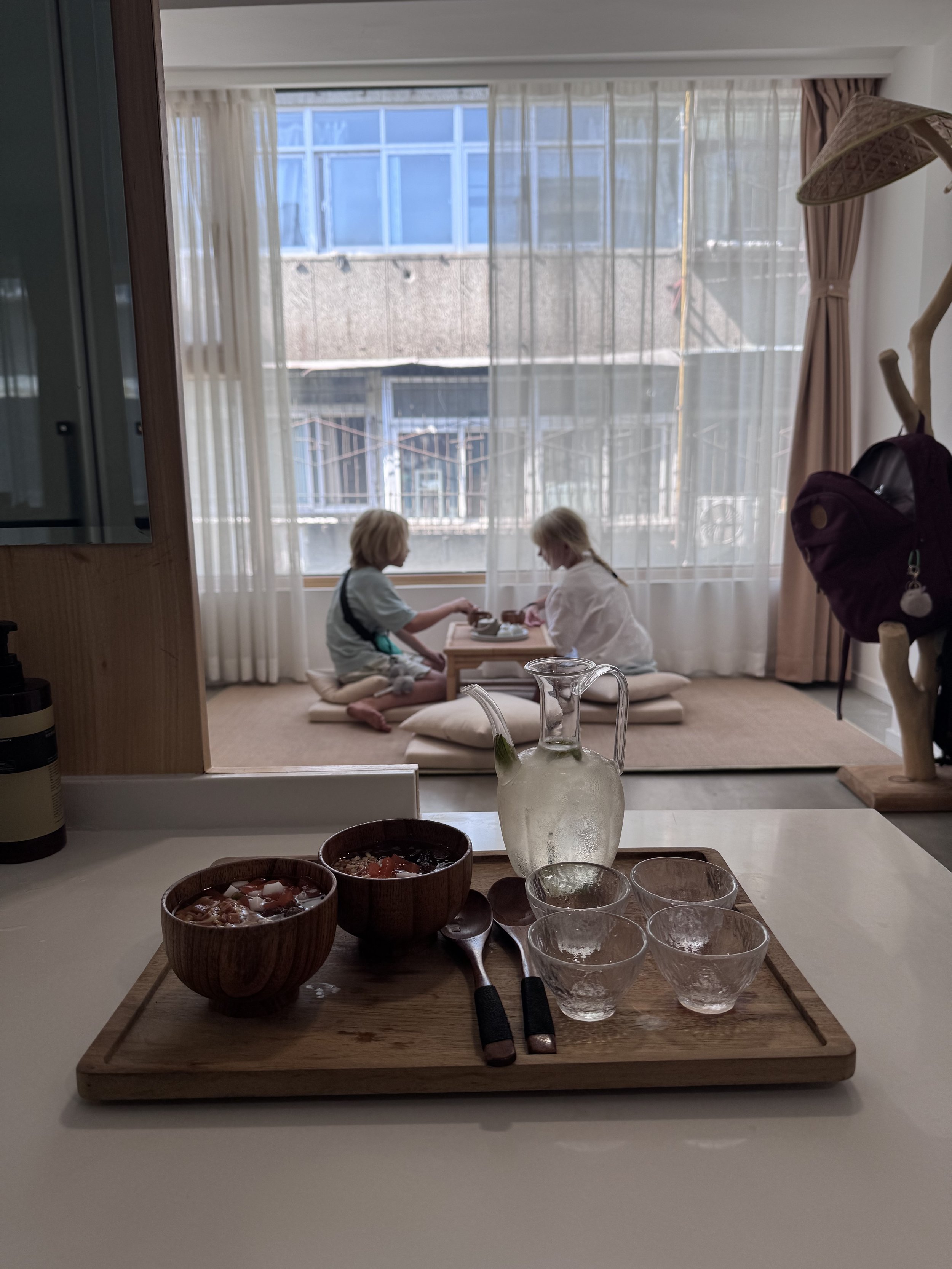
From a Homestay in Xi’an that was really beautiful and cozy
Myths and realities
Before we left, everyone had advice on China. Some warnings turned out to be true, some completely wrong, and some more nuanced. Here are a few of the big ones:
“The air is terrible.”
Not in our experience. Beijing, Xi’an, Chengdu and Shanghai surprised us with clean, humid air, almost entirely electric cars, and huge green lungs (the city parks are huge!). We even saw stars at night some places. In smaller towns like Pingyao, the air wasn’t as fresh, but still not the choking smog we’d been warned about. Fun fact: China was early with recycling and waste-to-energy projects. The country is literally “scraped” clean of garbage — there are trash bins everywhere, and streets are spotless.
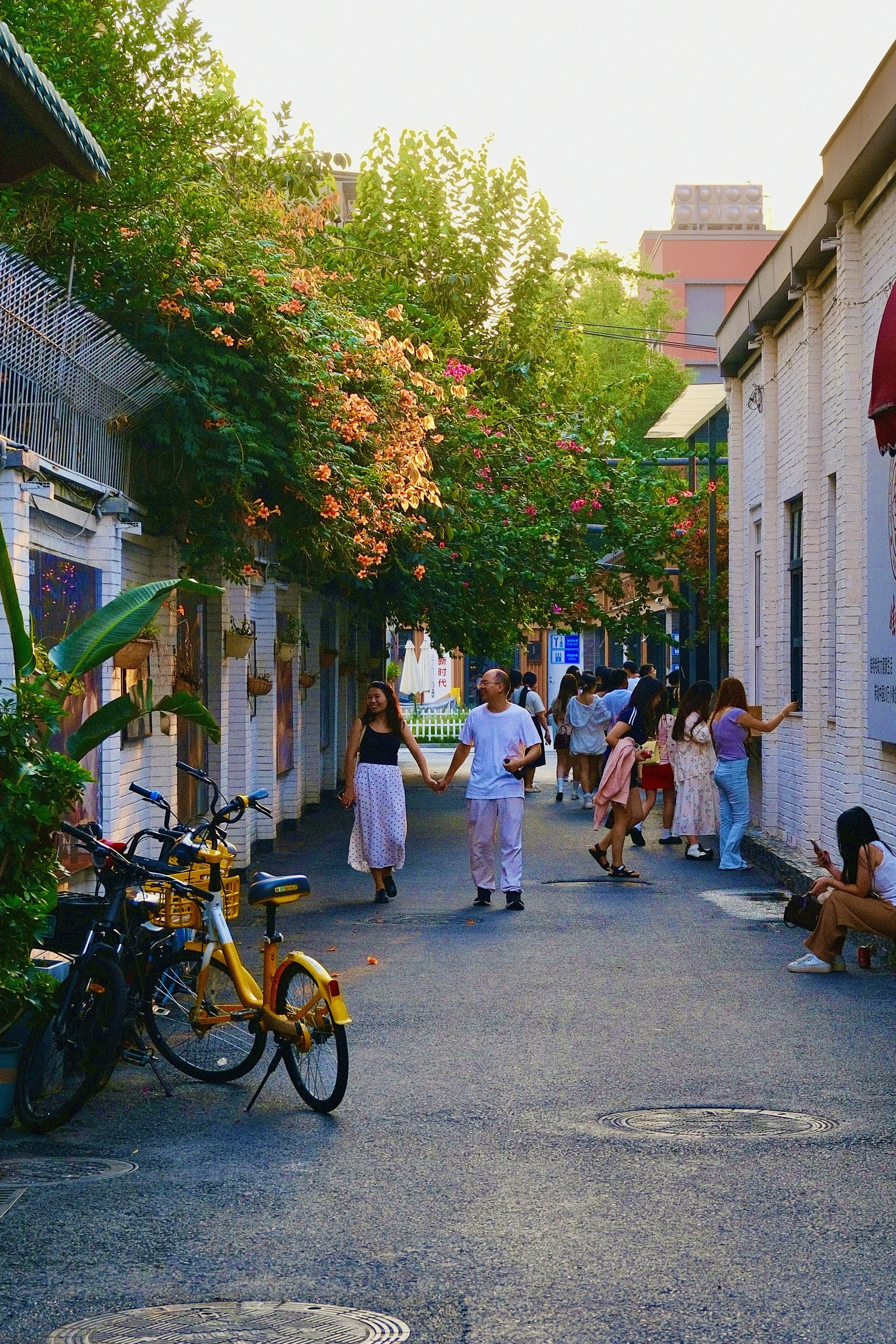
One of many lush, clean streets in China. This is in Chengdu.
“The food is just rice.”
Not at all. Except for fried rice at breakfast, we were never served rice. Instead, it was bowls of steaming noodles, dumplings wrapped in pancakes, hotpots bubbling with broth, oxtail stews, soups with fresh herbs — some of the best food we’ve ever tasted. It’s nothing like the “Chinese food” you get in Norway. But it’s heavy on noodles and light on fiber, so our stomachs did crave oats and yogurt after a while. Thankfully, big supermarkets saved us, and in Shanghai we even bought a drip filter to brew our own coffee.
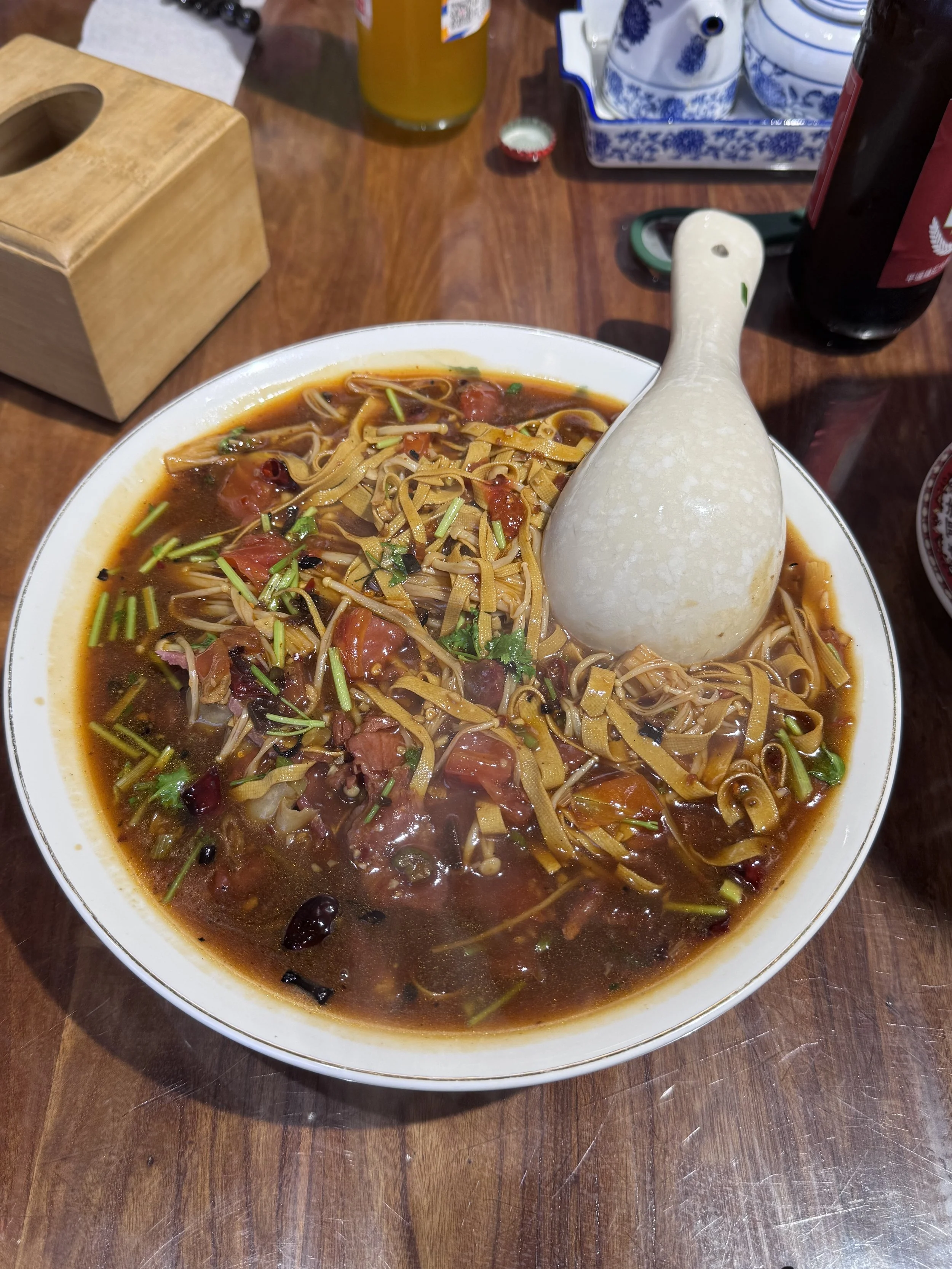
This is way more typical Chinese food than what we are used to back home.
“People don’t queue, they push.”
Yes, this one is true. Lines are more like crowds. People shove, talk loudly, watch TV on their phones in public without headphones, spit on the street. At first it felt overwhelming, later we just accepted it as part of the rhythm.
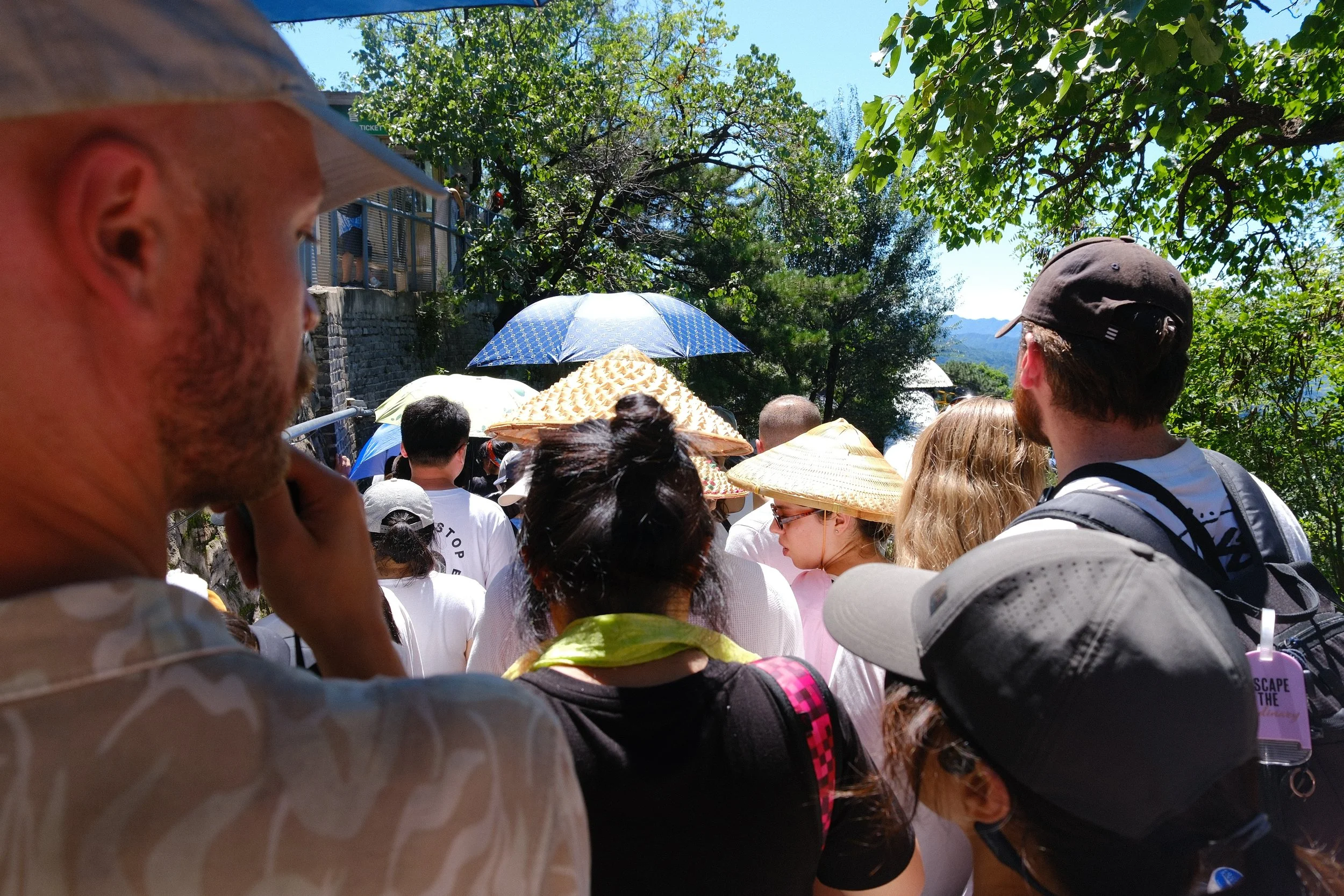
Sweating in a hours long queue down from the Great Wall.
“It’s communist and closed.”
This is both true and not. Rules are everywhere — no walking on the grass, no swimming without a cap (even if bald!), signs of prohibition in every park and metro station. But this summer, it was actually allowed to lay on the grass because of the heat! Yep, the Chinese goverment saw the need for outdoor activities in the afternoon and opened the parks for more social hang outs, concerts and less rules.
Yes, Western apps are blocked: Gmail, Facebook, Instagram. But life felt much more modern and “Western” than we imagined. Online shopping is hyper-efficient, with food and packages delivered to train doors as you travel. With Alipay and WeChat, daily life runs smoother than in many European cities.
“Foreigners will face racism.”
This one we want to nuance. People stared at us, took photos, even filmed us secretly. At first it was strange, then we realized it was simple curiosity. We were exotic to them, just as they were to us. For us, it never felt hostile, only warm and a bit overwhelming at times. We prefer to teach our kids not to take offense, but to meet curiosity with curiosity.
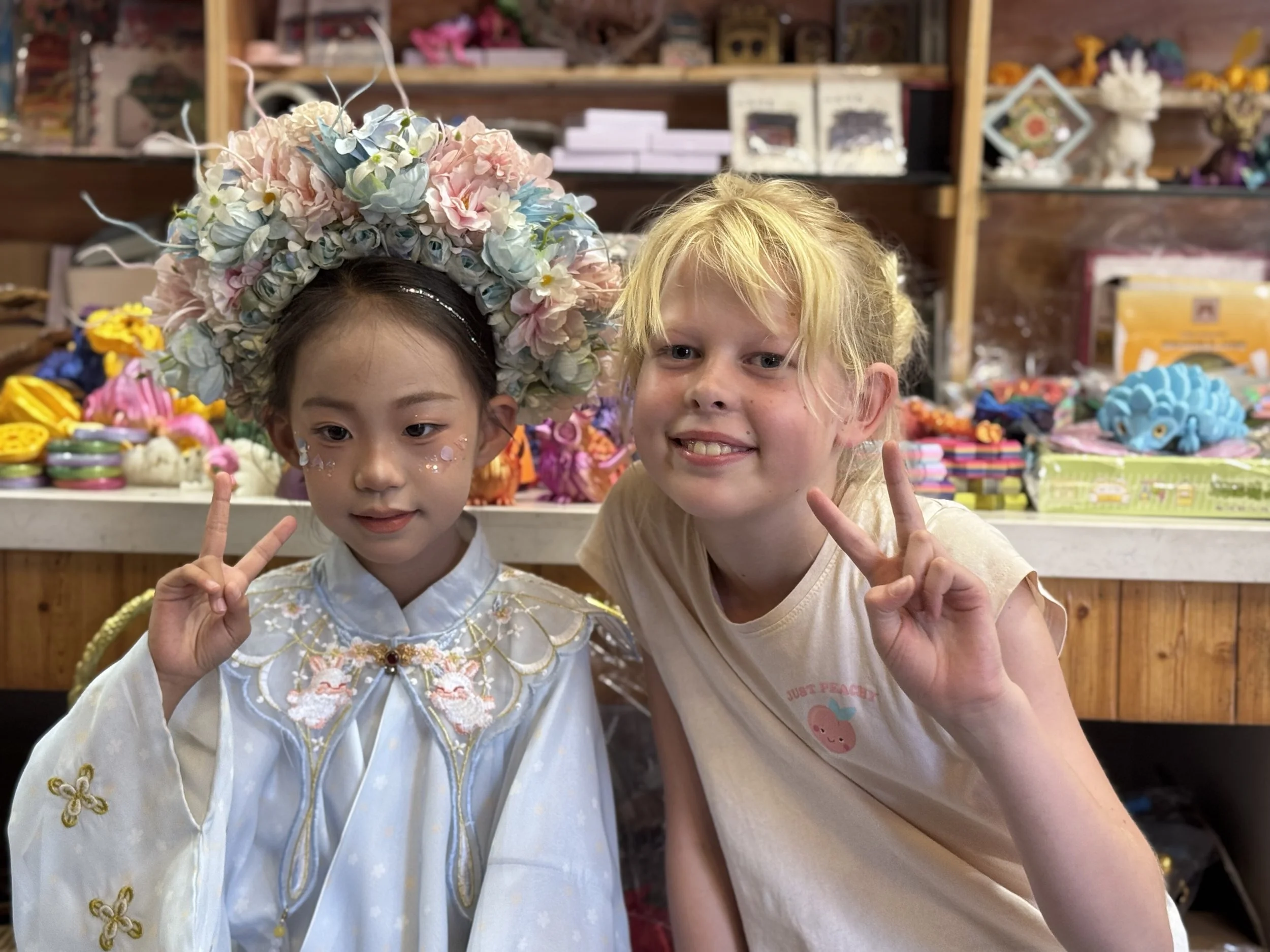
A shy girl, same age as Astrid, asked for a photo together with her. It was a great photo for us too, because she was so beautifully dressed up in traditional clothing.
Everyday life in China
A few things that shaped our daily rhythm:
Water: You can’t drink from the tap. For the kids, this was a big revelation — realizing how lucky we are in Norway to have clean water straight from the mountain.
Smoking: Still very common, even indoors. Booking a non-smoking hotel room is essential, but the smell is sometimes unavoidable.
Toilets: You’ll find public toilets everywhere in China. Everywhere. They are very clean and in good condition, but hardly ever with toilet paper. Be prepared to squat, though. You’ll get used to it.
Transport: 10/10. The metro systems are spotless, efficient, cheap (kids free), and impossible to get lost in. Everything is written in both characters and English. The high-speed trains are comfortable and fast.
Digital life: A good VPN (we used ExpressVPN) is essential to access Western apps. Airalo eSIMs worked fine, though coverage was patchy. Payment is done almost entirely with QR codes — we used Wise Visa cards connected to Alipay and WeChat.
Power banks: A lesson learned the hard way. You can’t bring just any power bank into China — it must have the CCC mark, not CE. You will get it confiscated at the border if you buy and bring from Norway. Luckily we found out about this the evening before we left Oslo, and left them behind. With that in mind, power banks are much cheaper in China and we bought the same brand for half the price here.
What we loved most
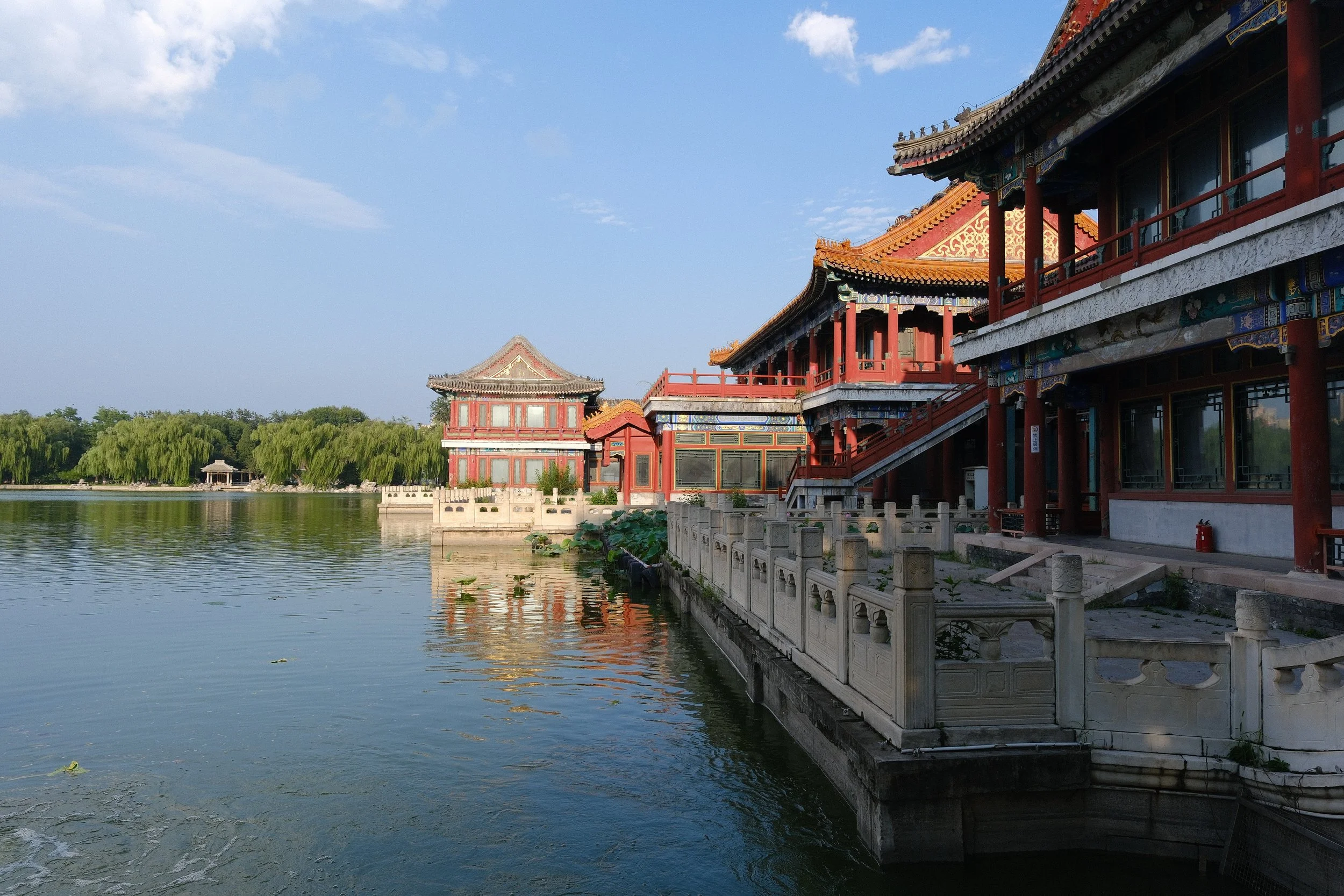
We didn’t run after every tourist attraction. August in China is intensely hot, (some days almost unbearable) so we quickly learned to lower expectations, slow down, and embrace smaller discoveries. Royal parks instead of palaces, side streets instead of landmarks. And truly, every corner is history anyway: the Middle Kingdom has layers upon layers, and you feel them simply by walking.
What touched us most, though, were the people and the culture. Friendly, social, and warm, with an eagerness for connection that crossed language barriers. In the evenings, couples dressed up and danced in the parks — swing, waltz, and others just came to watch them. Food stalls, centuries old buildings, neon-lit shops, and quiet courtyards all wove into a living blend of past and present. It was beautiful to see how modern life and tradition are both cared for and celebrated.
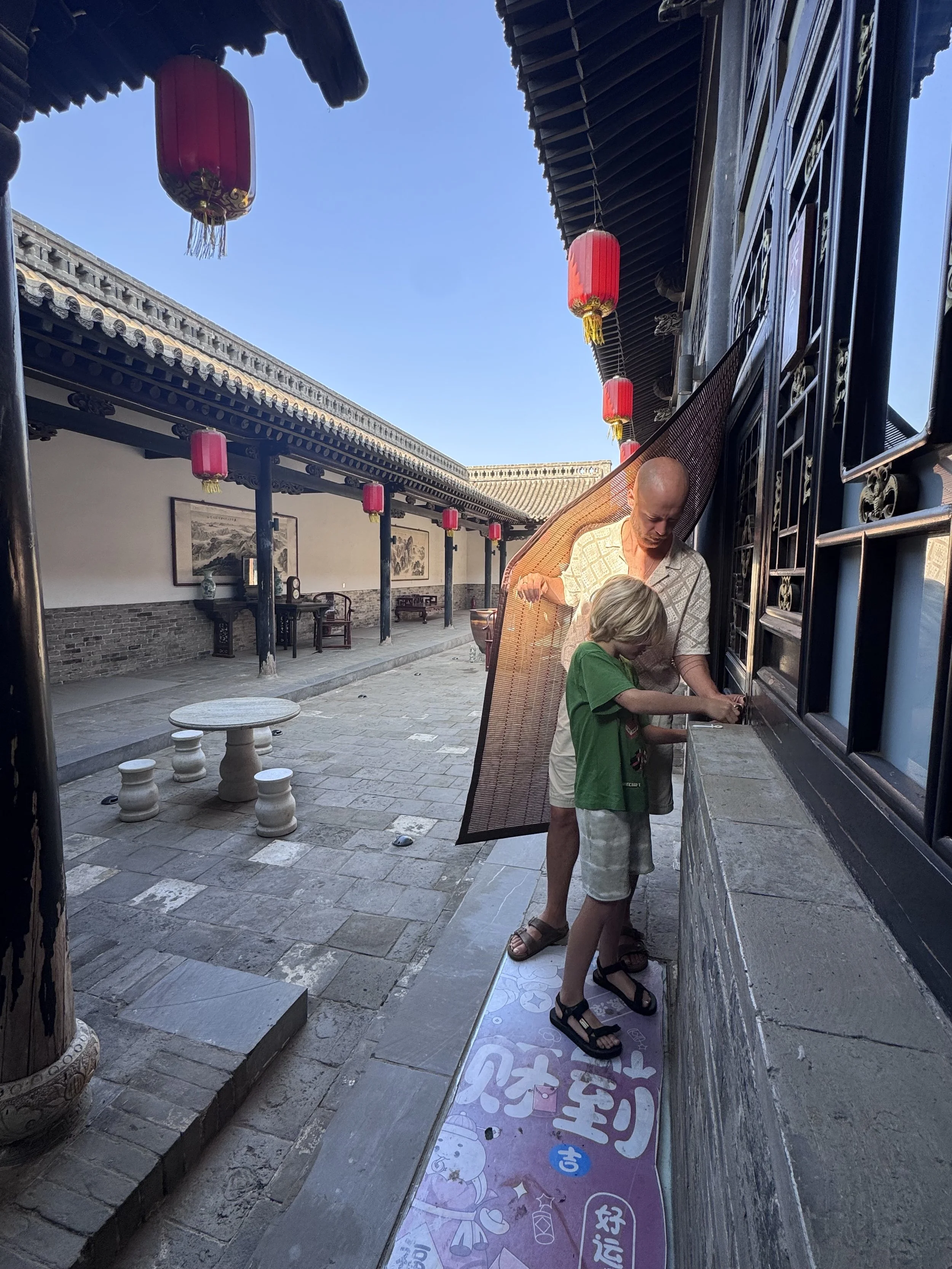
From Pingyao where we lived in a hundreds of years old stone house.
And beneath it all, there’s a strong sense of order and collective effort: streets cleaned daily, people at work everywhere, rules followed (and sometimes bent). China has changed enormously in just the past 20 years, and you can feel that transformation in every detail.
China was a baptism by fire — noisy, structured, rule-heavy, endlessly fascinating. It forced us to stay flexible, to laugh at the unexpected, and to keep our patience. It reminded us that presence matters more than plans, that storms and heat teach resilience, and that every culture has its own rhythm of respect. We just scratched the surface of this magical, colourful, country full of history and wonders, and we definitely want to come back one day!
Now, we’re ready for South Korea and Busan with beaches, a kitchen, separate bedrooms, and a little more “home life.” After a month of hotels, restaurants, and daily adventures, we’re craving a softer landing.
Essential apps and tools for traveling in China:
Alipay & WeChat – the main platforms for everyday payments.
Wise Visa Card – many foreign cards don’t work, but Wise connects smoothly to Alipay/WeChat.
ExpressVPN – crucial for accessing Western apps (Gmail, Instagram, etc.).
Airalo (eSIM) – reliable mobile data without hunting for local SIM cards.
Apple Maps – excellent for navigation, with everything in both Chinese characters and English.
Amap (Gaode Maps) – especially good for public transportation and local navigation.
Apple/Google Translate – for quick translation on the go, including live photo and voice features.
Costs (family of 4):
Hotels: up to 1,100 NOK/night (mid-range)
High-speed trains: 300–600 NOK/ticket (kids half price)
Street food: ~150 NOK for all of us per meal
Tourist attractions: often expensive
Western food & coffee: very expensive
Local transport: very cheap
Our best tips:
Bring a CCC-marked power bank
Always book non-smoking rooms
Carry melkesyrebakterier (probiotics) for your stomach
If you prefer to drink good coffee and save money, bring a drip filter in your suitcase!
(For the ladies:) Menstrual disc or cup makes squat toilets mess free and its good on the planet too.
Expect to be photographed — smile back😄
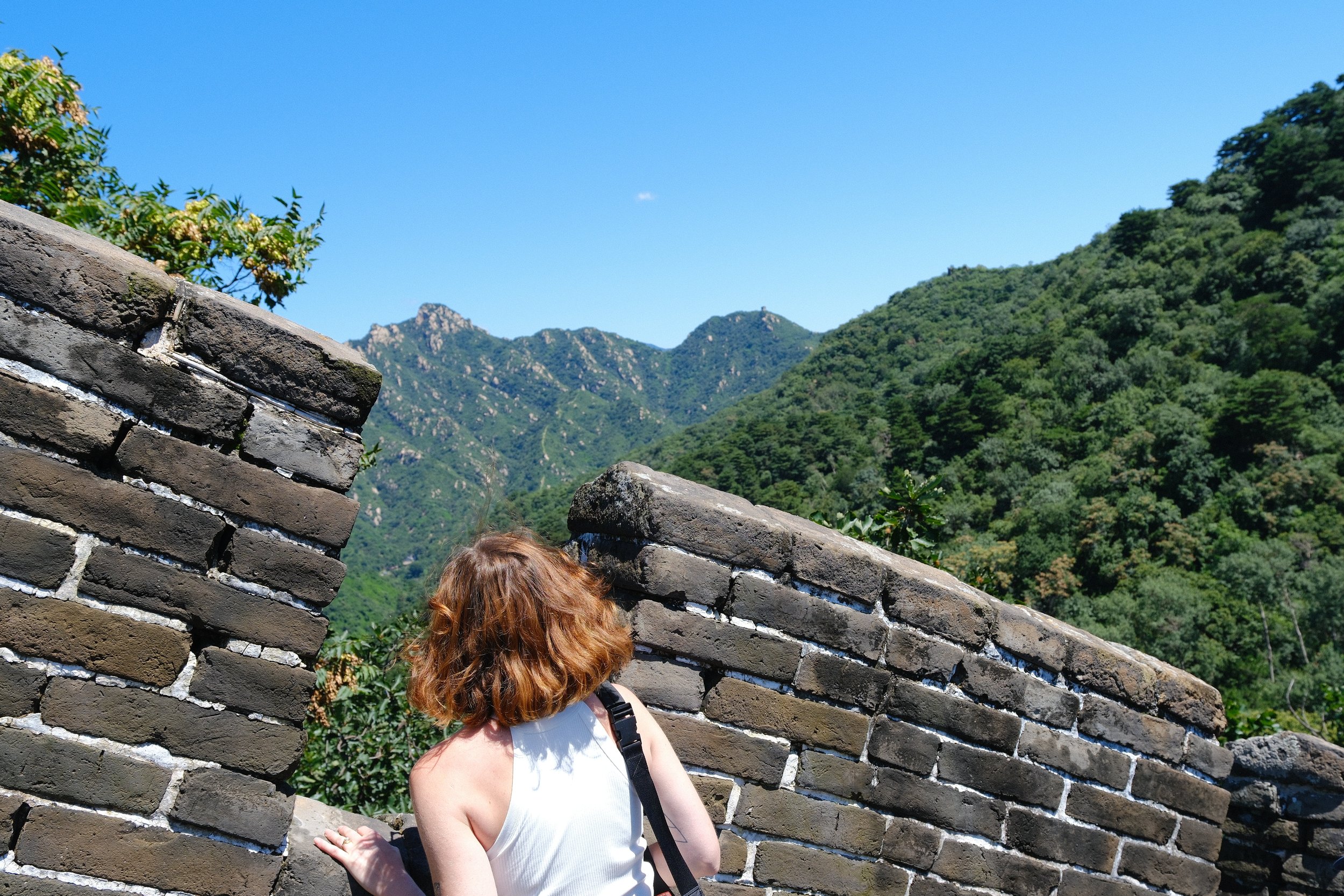
Thank you China.
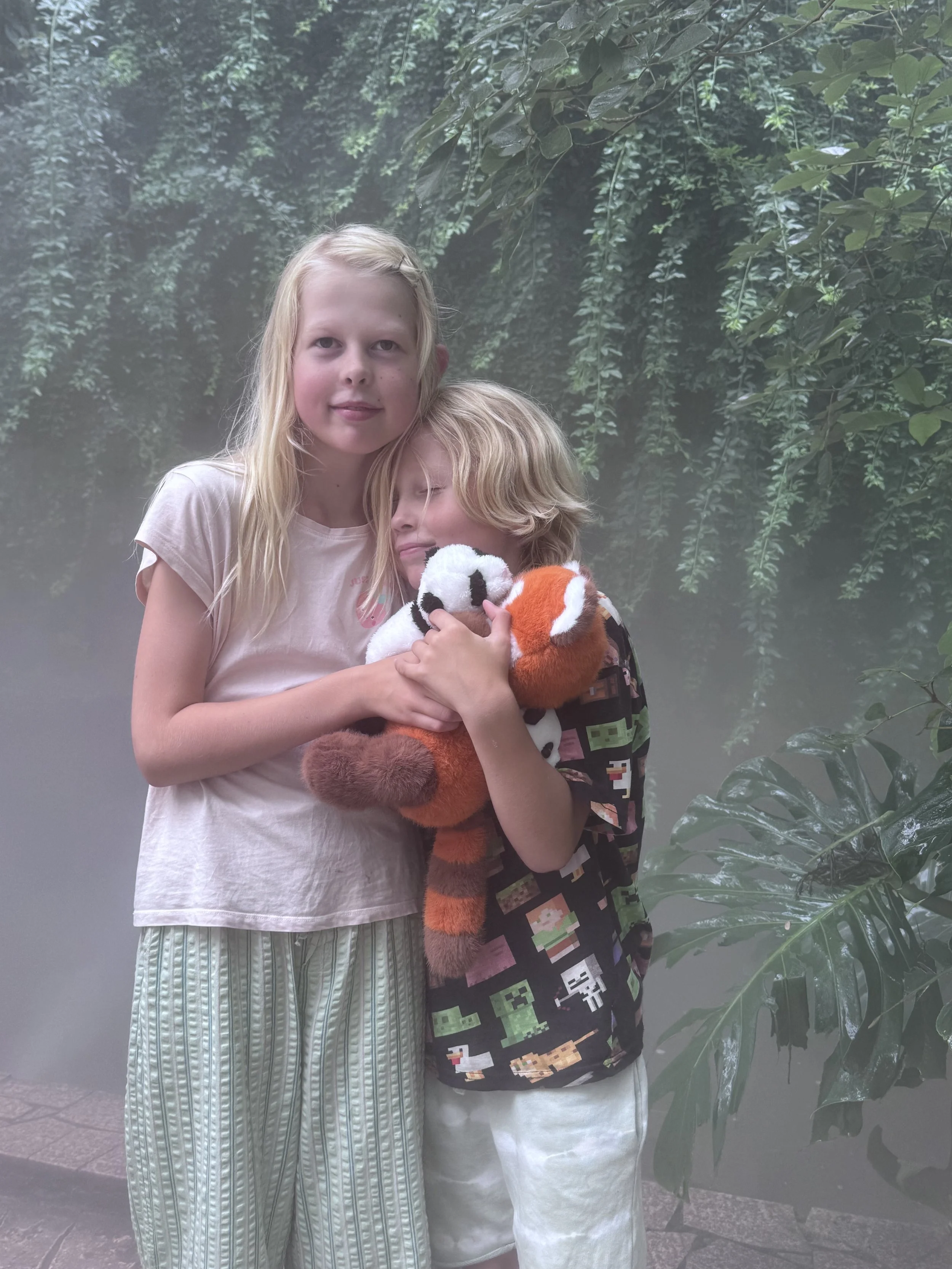
We will forever remember China and how we learned to be so close together.