
Our travel resources
This page collects the booking platforms, apps, routines, and practical systems we use while traveling long-term in Asia as a family.
Everything here is based on real use, including what works well, what has limitations, and what we’ve had to adapt along the way.
Booking accommodation
Platforms we use
Trip.com
We use Trip.com a lot for flights, trains, and accommodation across Asia. While we’ve had some issues with them, it remains one of the most comprehensive platforms in this region, especially when traveling between countries and booking Asian domestic transport.
Booking.com
A reliable platform with good filters, flexible cancellation options, and clear room descriptions. We use it frequently for family rooms and apartments.
Airbnb
Used mainly when staying longer or when we need more space. We avoid heavy cleaning fees, unclear Wi-Fi information, and complicated check-in processes.
Direct booking
Never. We prefer platforms with customer support if something goes wrong.
What we look for in accommodation
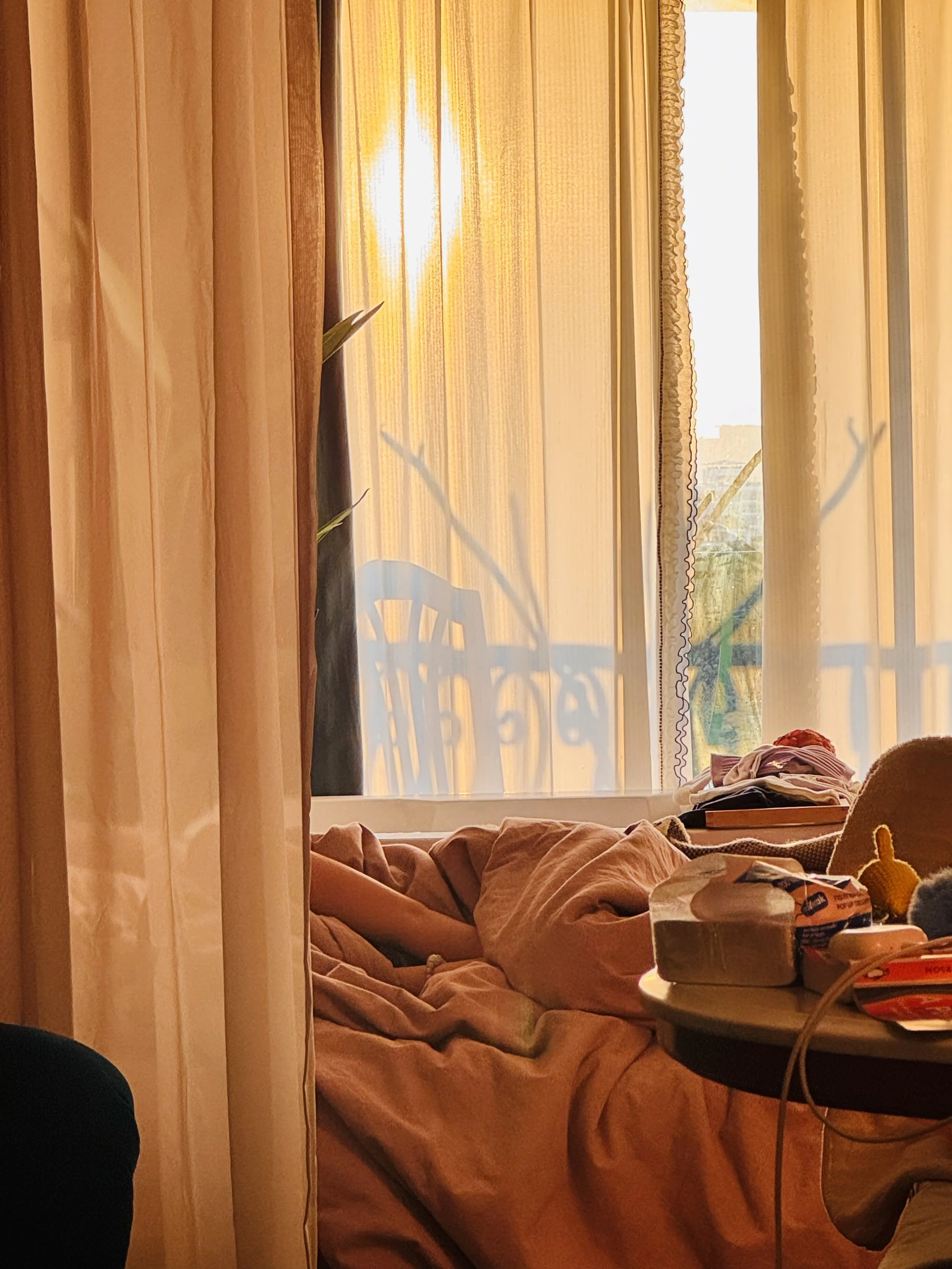
We travel on a low to moderate budget, and our accommodation choices reflect that. Most of the places we stay cost around 400–700 NOK per night, typically family rooms, small apartments, guesthouses, or simple hotels. This price range has worked well for us across China, South Korea, Malaysia, Indonesia, Thailand and Vietnam, although prices vary depending on country, season, and whether we’re staying in a major city or a smaller town. In capitals or peak seasons we sometimes pay more, while in other places we’ve stayed well below this range.
At this budget level, we prioritize everyday functionality over luxury. What matters most to us is:
Space and separate beds for the children
A table or desk for work and school
Kitchen
Stable Wi-Fi
Family-friendly area
Walkable access to food and daily needs
We deliberately choose fewer amenities and less of a resort feel in exchange for places that support longer stays, simpler routines, and lower overall costs.
Luggage & packing
Our setup
Astrid and Hannes has each their own backpack and one 45l bag on wheels.
Miriam and Bjarne use larger backpacks suitable for heavier carry-on plus 80l bags on wheels
We are super satisfied with our set up: here is link to our bags from Osprey.
At several points, we’ve:
Left the large bag behind
Traveled with backpacks only
This is extremely freeing when possible.
Clothing rules
When buying new clothes, something else is given away
This keeps luggage weight roughly stable
Shipping items home has proven extremely expensive, so instead we plan to:
Purchase extra checked baggage for the return journey from Japan
Offline life
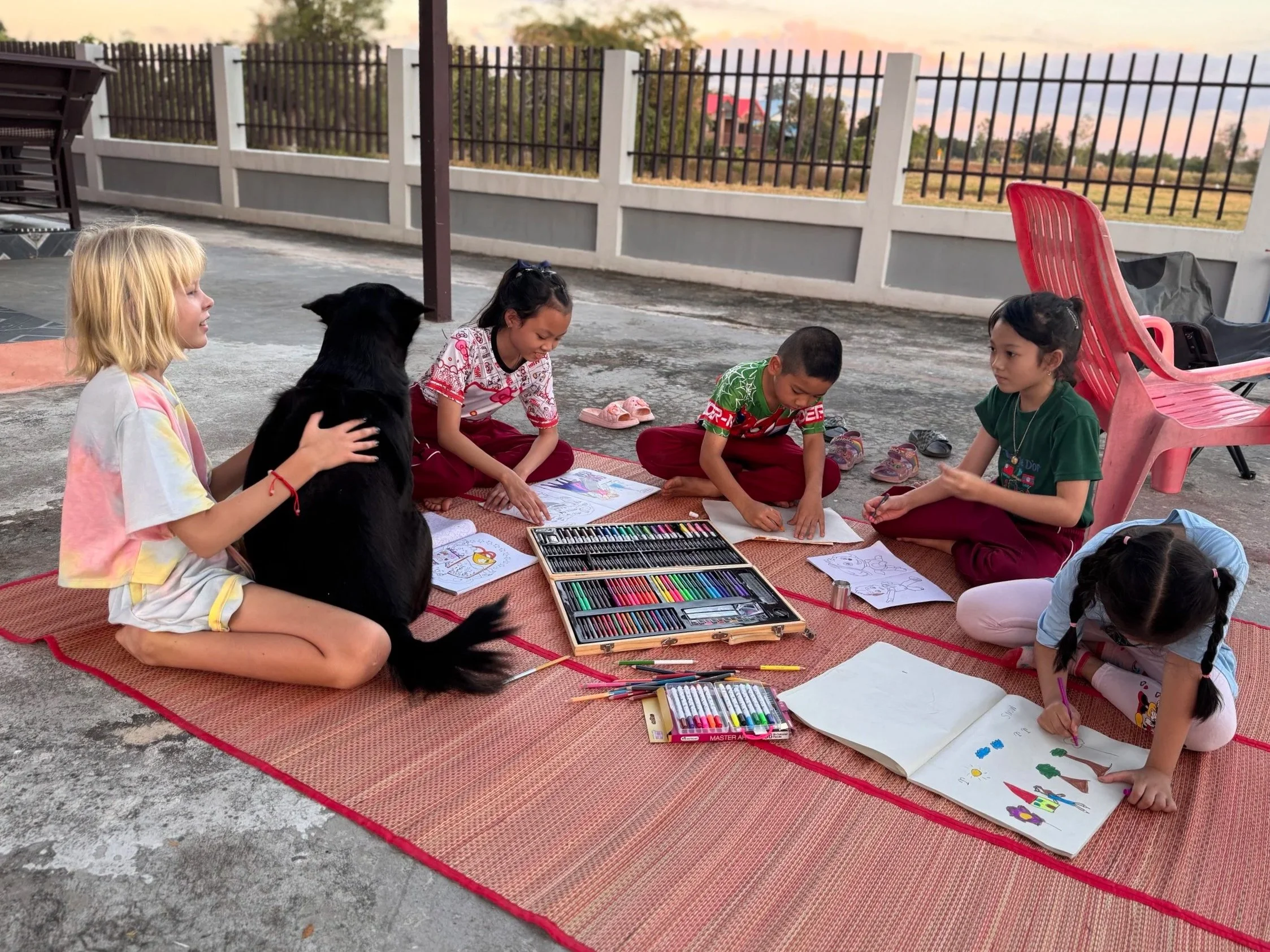
Because travel naturally involves screens (navigation, work, communication, photos and video, posting). We travel with:
Plank paper
Color pencils
Playing cards and travel-sized Othello
Sudoku book
Oracle cards
Toys
Yarn and crochet-needles
Books
Diaries for each child
We read physical books, more than ever, even if we know it’s more practical with a Kindle. We already carry a small library in our bags and we enjoy it so much (hard to let go of good books). Crocheting is also very popular for some of us.
We know it takes up much space, but these things are so important for us as we travel.
Homeschooling on the road
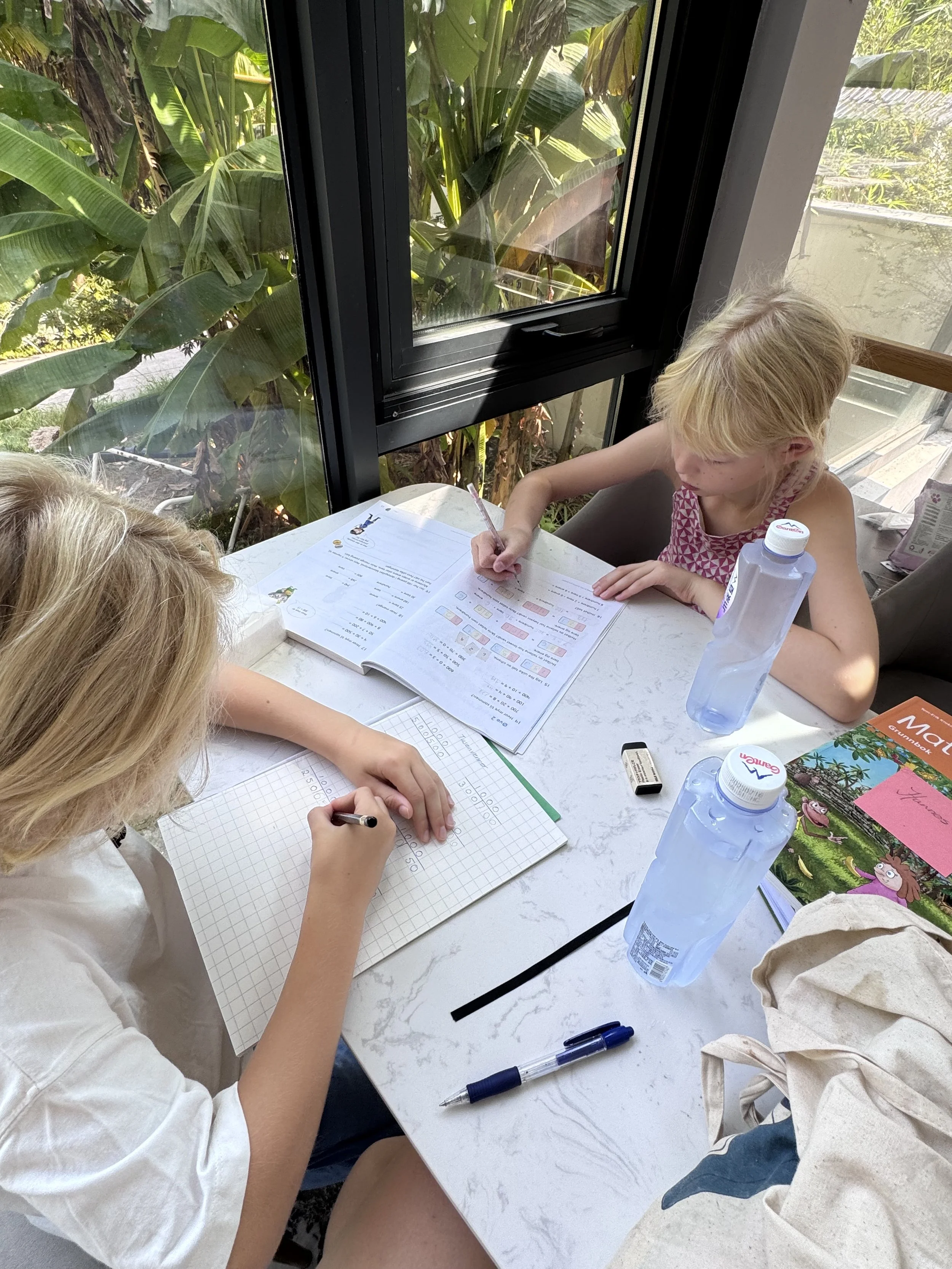
Our homeschooling is experience-based and integrated into daily life.
In practice:
Around 1- 3 days per week
1–3 hours per day of focused schooling
We where pretty structured in the beginning of our journey with focused s3 hour school time 3 days a week. What we have experienced over time is that often, the best learning happens on days without formal school, because that often end up with arguing or bad mood which drains everyone.
So we:
Let the kids order food and calculate costs
Read signs, maps, and schedules together
Navigate cities and transport as a team
Look up local history and stories
Discuss what we see and experience
Watch english spoken movies and documentaries and support the children when they want to talk with strangers.
We also:
Build simple apps or solutions together with the kids.
Play games
Read and write
Talk — a lot
Screen time is strictly regulated and used intentionally.
Electronics & work essentials
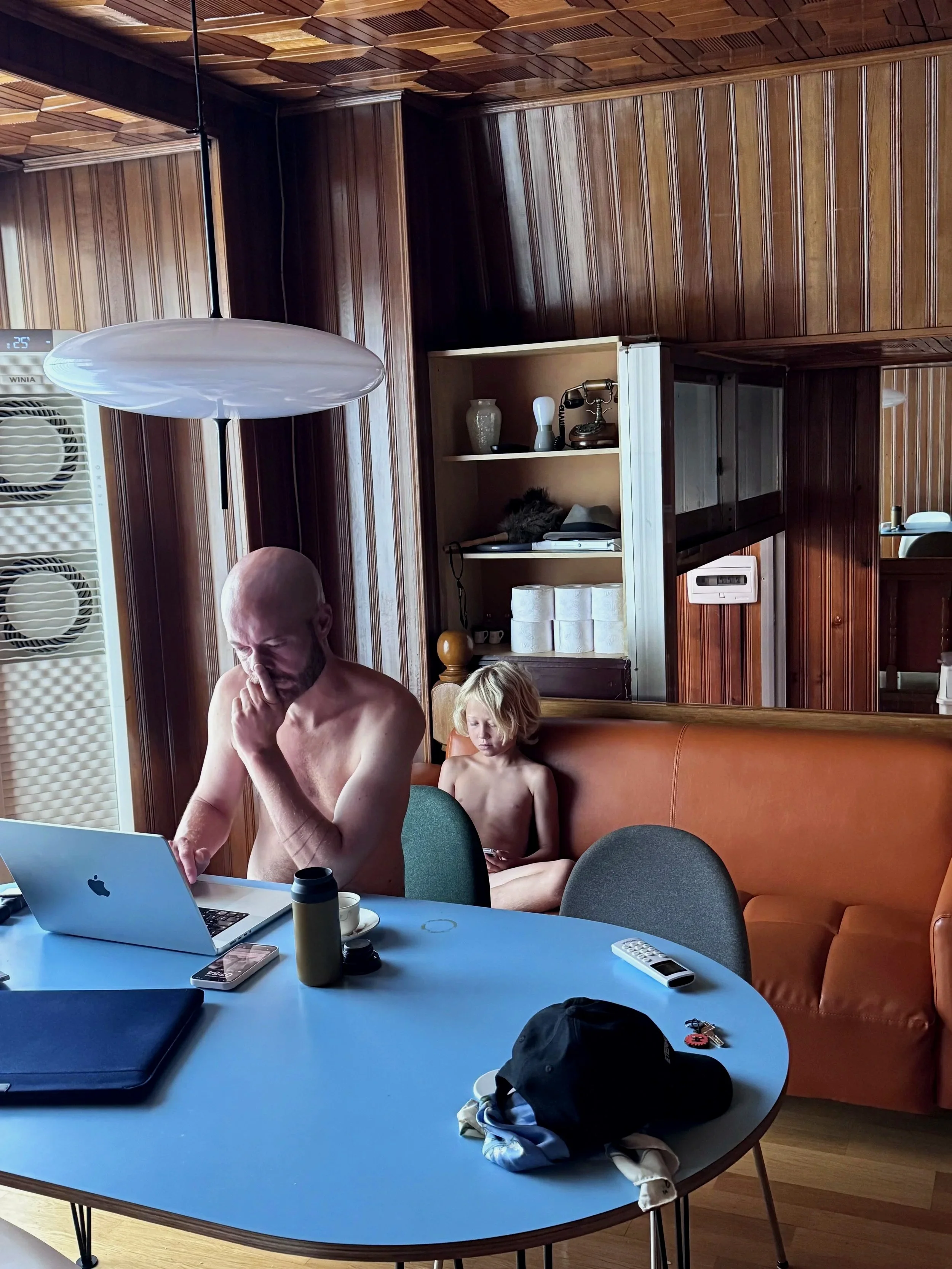
Laptops and chargers
Travel adapters
One power bank (no not bring to China if not marked with CCC)
Noise-cancelling headphones
Headset for the kids
For documenting travel:
iPhone
Fujifilm x100s
DJI Osmo pocket 3 video camera (sadly we almost never use his one.)
Small external microphone
Lightweight tripod