
Ubud, part 1
22. october - 8. november
We returned to Bali from Malaysia ready to slow down for a while. After a couple more nights at our favorite hostel, we ordered a Grab and headed toward Ubud. The drive took us past small villages, little roadside shops, glimpses of the ocean, and stalls selling all kinds of things. Slowly the scenery shifted and we could see huge volcanic mountains in the distance, thick tropical forest, rice terraces folding into the hills. After about two hours of driving we were there.
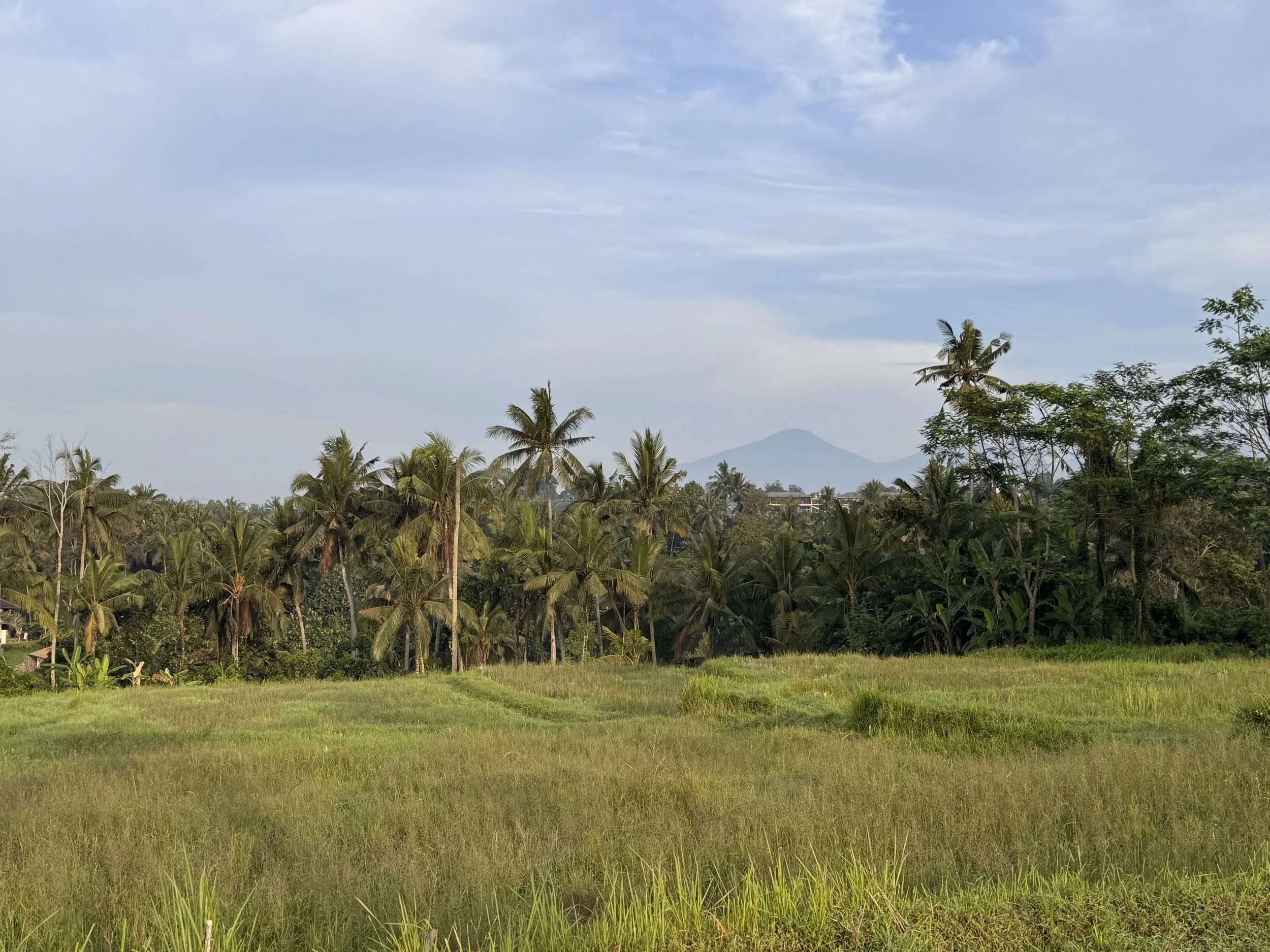
Ubud felt pulsing right away. Small healthy cafés, souvenir shops stretching onto the streets, linen clothes in soft earthy colors moving in the breeze, incense drifting through the air, batik fabrics layered over wooden tables. Spiritual symbols were seen everywhere, fromT-shirts, signs, jewelry and tattooed onto people. Temples tucked between storefronts. Monkeys on cables. Scooters buzzing past. Women in yoga pants heading somewhere purposeful with smoothies to go. It was a lot to take in, and surely very interesting.
Before arriving, Bjarne and I had heard very different perspectives about Ubud. Some people described it as the most wonderful place on earth — creative, spiritual, beautiful, full of retreats where people slow down and reconnect in the middle of nature. Others were more critical, talking about how tourism had reshaped the town: rising prices, locals moving further out, rice fields turning into villas, cafés, coworking spaces, and retreat centers. A wellness industry that sometimes seemed built more for visitors than for the people living there.
Because we both come from spiritual practices ourselves, we carry deep respect for inner work and the value it can have. Still, some of what we heard felt slightly unsettling. Stories about a kind of bubble — Western visitors moving through expensive programs, sometimes backed by international investment, engaging with practices rooted in everyday Balinese life but presented in curated spaces focused on the individual.
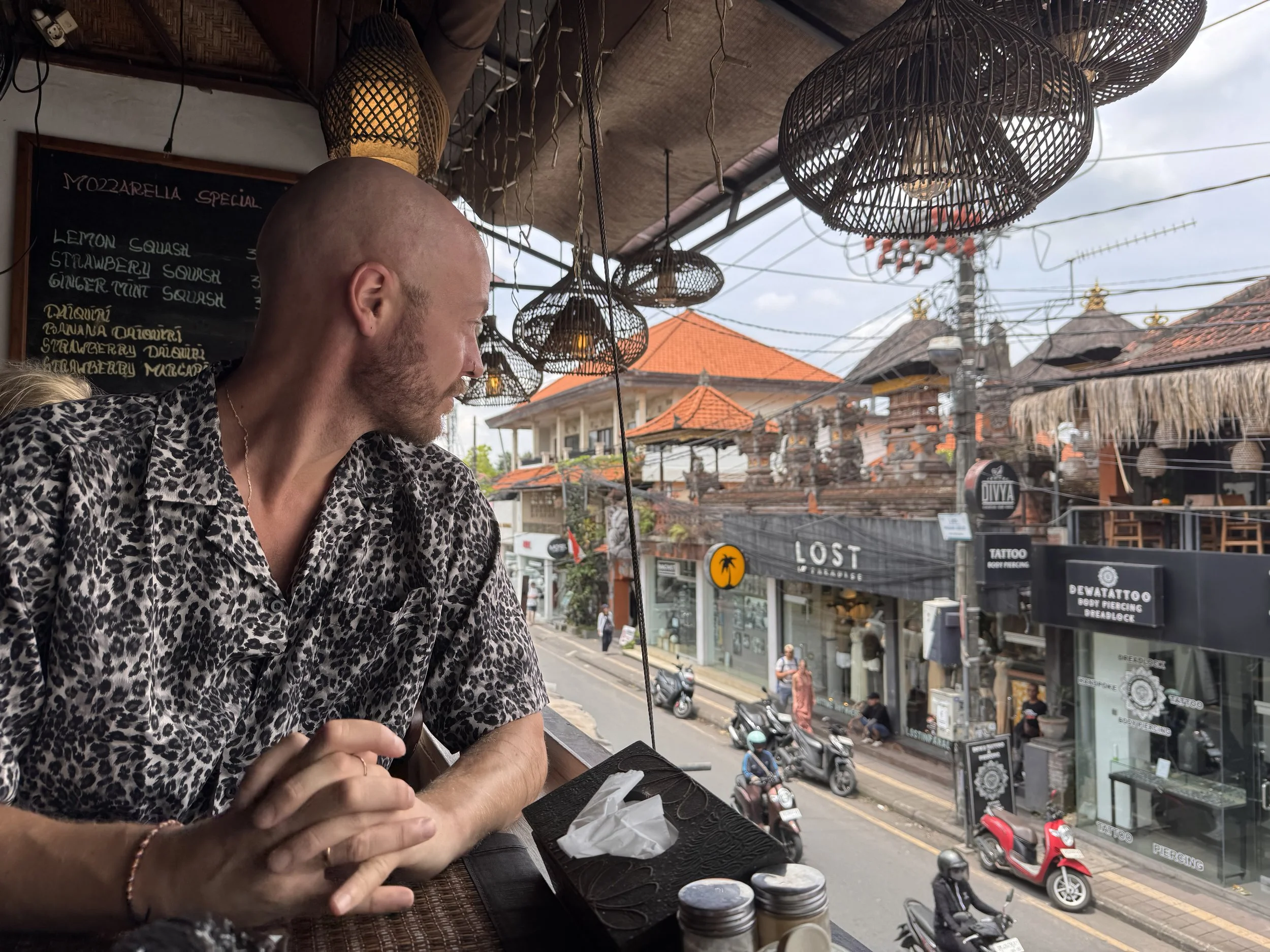
We found ourselves thinking about balance. These places can create opportunities and meaningful experiences, yet the contrast between collective daily devotion and individualized wellness can feel striking. We wondered how to engage in a way that appreciates the culture without simply consuming it.
So we arrived curious rather than decided, open to whatever Ubud would show us.
Instead of staying in the center, we drove about thirty minutes out of town. The road eventually turned into moss-covered cobblestones leading down toward the jungle. At some point the car couldn’t continue and we walked the last stretch. We stepped into an open restaurant overlooking a deep green valley — reception, as it turned out. Three smiling helpers appeared immediately and carried our bags while our host led us down to the very last apartment.
Seventy steps down into the jungle
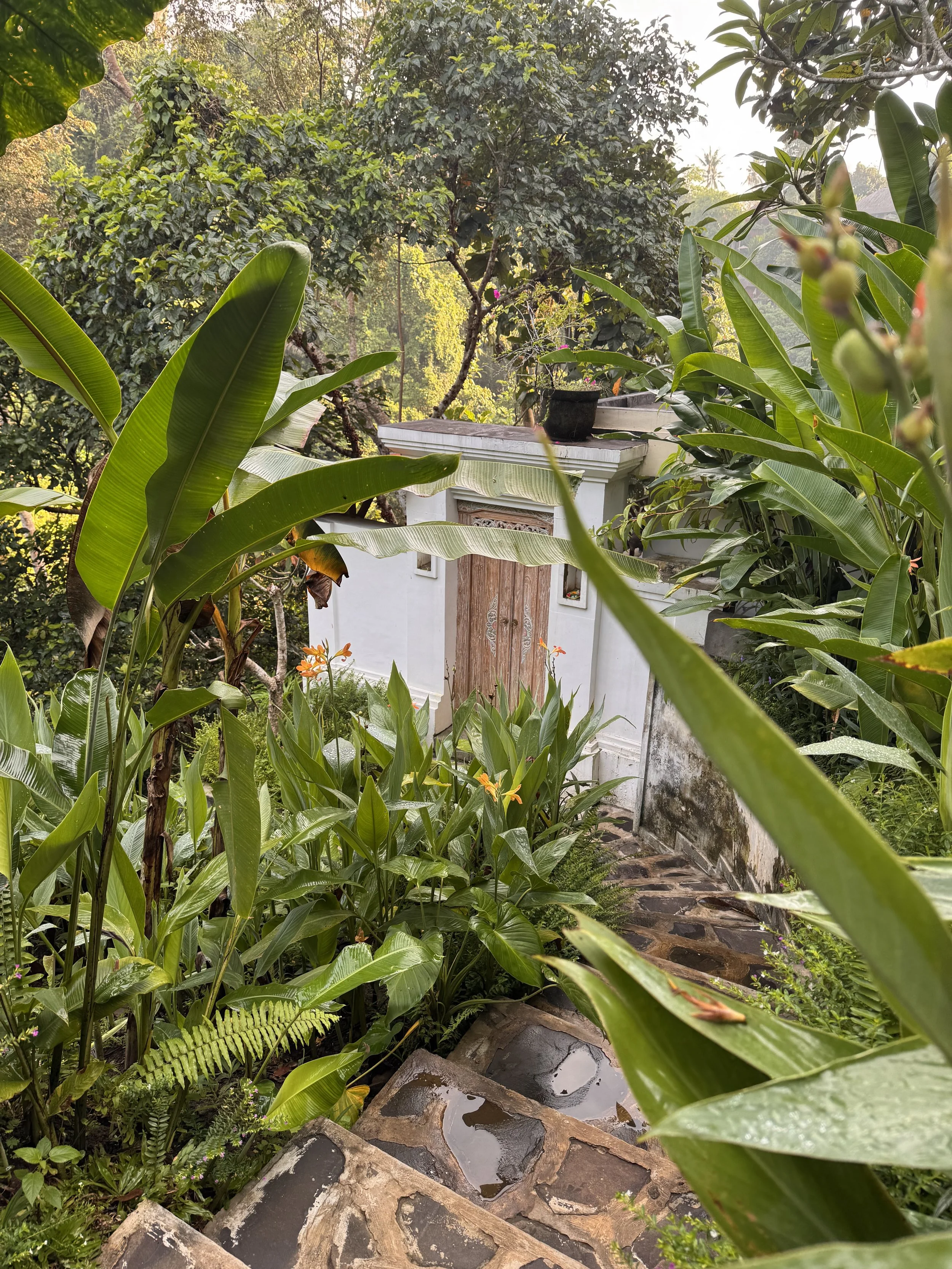
Our serene entrance
Our door had a heart-shaped padlock and our entrance was wrapped in plants. The living room was basically just a covered balcony — no walls except those leading into the bedrooms. Two big glass doors opened into separate rooms, each with its own bathroom. The bathrooms had windows without glass, one of them straight into the jungle. A full kitchen, a big fridge, and drinkable tap water!!
Walking into that place and realizing we would live there for three weeks was overwhelming. I sat down and cried. It had been so long since life felt that spacious, bountiful and easy.
The next morning we ordered breakfast to the door. About forty-five minutes later — because things arrive when they’re ready — three young men showed up with large woven trays filled with banana pancakes, fresh juice, cocoa for the kids, Bali coffee, fruit, omelets, toast, smoothie bowls. We just sat there smiling at each other. Are we in heaven?
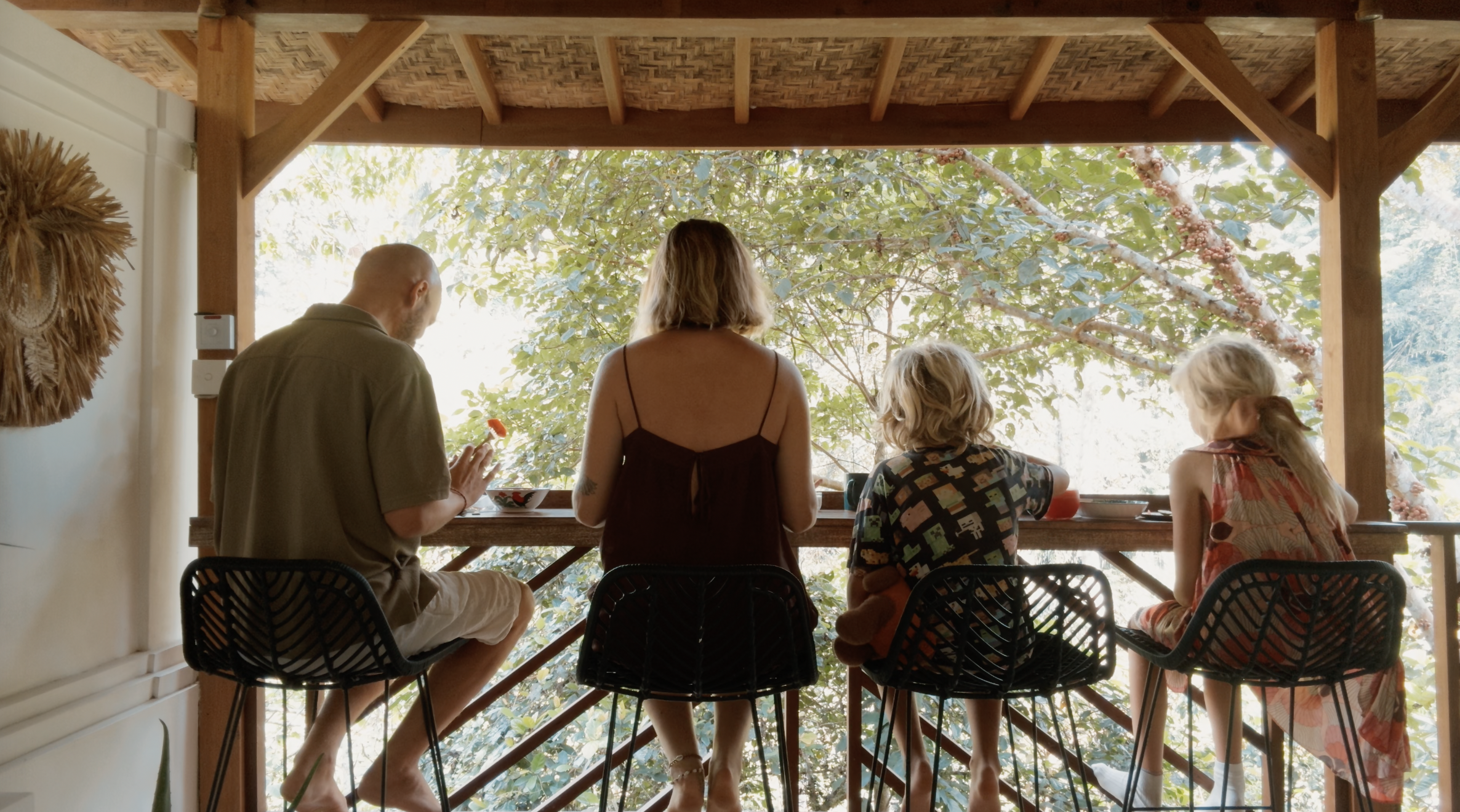
Breakfast with a view.
Living in nature gradually became our new normal. Macaque monkeys visited almost every day, sitting in the trees two meters from our terrace watching us like we were part of the scenery. Sometimes a few climbed onto the railing but never came inside. We had learned the rules in Kuala Lumpur: don’t feed them, don´t yell or move fast towards them. Here we also had to keep things tidy, don’t leave snacks out. They were wild and more cautious than the monkeys in town. Eventually we could just sit and watch them and enjoy the company. The babies played in the branches while the adults searched for food. It was so fun to observe them like that.
Mornings were loud. Insects everywhere, especially one cicada that sounded exactly like an angle grinder. Sometimes it felt extreme, but we loved the place too much to care. Huge butterflies drifted through the living space. Squirrels ran up and down the trees. Colorful birds crossed the valley below. We could hear a waterfall many meters underneath us. Our terrace hung over a steep drop down to a river; slightly scary, very spectacular.
Ants marched across the kitchen counter. A potter wasp mother bilt her house over and over, Geckos clicked at night. Huge beetles showed up when the lights came on. There was life everywhere, and somehow it didn’t feel stressful. We just adjusted. Except maybe to the lovesick angle-grinder cicada.
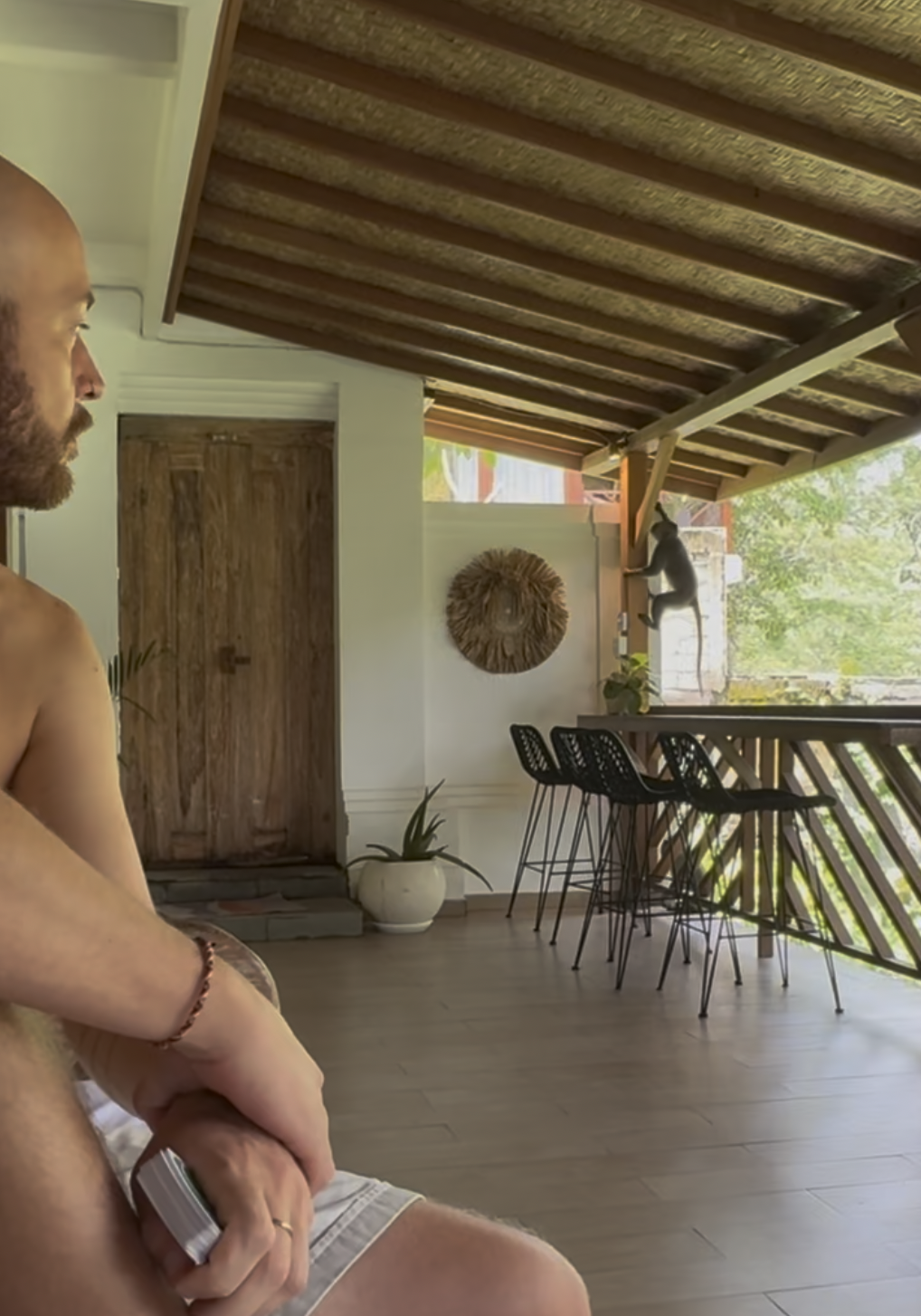
Monkey visit!
We had arrived at the end of October, which turned out to be a perfect time. Not high season, which meant the town felt lively without being overwhelming. It wasn’t packed the way many had warned us about. There was space to wander and just notice things. The monsoon had also arrived. Sudden heavy rain, thunder rolling through the valley, lightning cracking open the sky. The clouds could turn completely black within minutes. Sitting in our open home facing the jungle while the rain poured down was completely wild. A little dramatic, and so peaceful. We loved it.
Sometimes we went into town, but many days we stayed home. School continued, but we could feel something wasn’t working anymore.
Those weeks were both hard and important for me. Trying to hold structure with homeschooling became exhausting. The kids pushed back. My schedules meant very little. Comments like “you’re not good at teaching math” or “reading is boring” stuck more than I wanted them to. At some point I stopped pushing. No school meant happier kids. Less conflict. More play. I felt like I had failed — but the atmosphere at home was lighter. It was confusing.
Eventually we realized we needed to change the whole approach. Less recreating school at the kitchen table, more learning through life. Moving from homeschooling toward worldschooling — letting places, people, and experiences become teachers in a much higher scale.
We signed up for courses, found local teachers, tried new things. We talked more about how we felt, what we leaned. Even math became easier when it was playful. Multiplication games, throwing soft toys, bingo, silly rules. The pressure dropped and curiosity slowly came back.
At a small library in Ubud we joined a wood-carving workshop. Our teacher was an older man who clearly loved children. He came from generations of carvers, and everything around us had been made by his family. Masks, panels, instruments. Traditional Balinese instruments — gamelan pieces, kendang drums, bamboo flutes — all decorated with carvings.
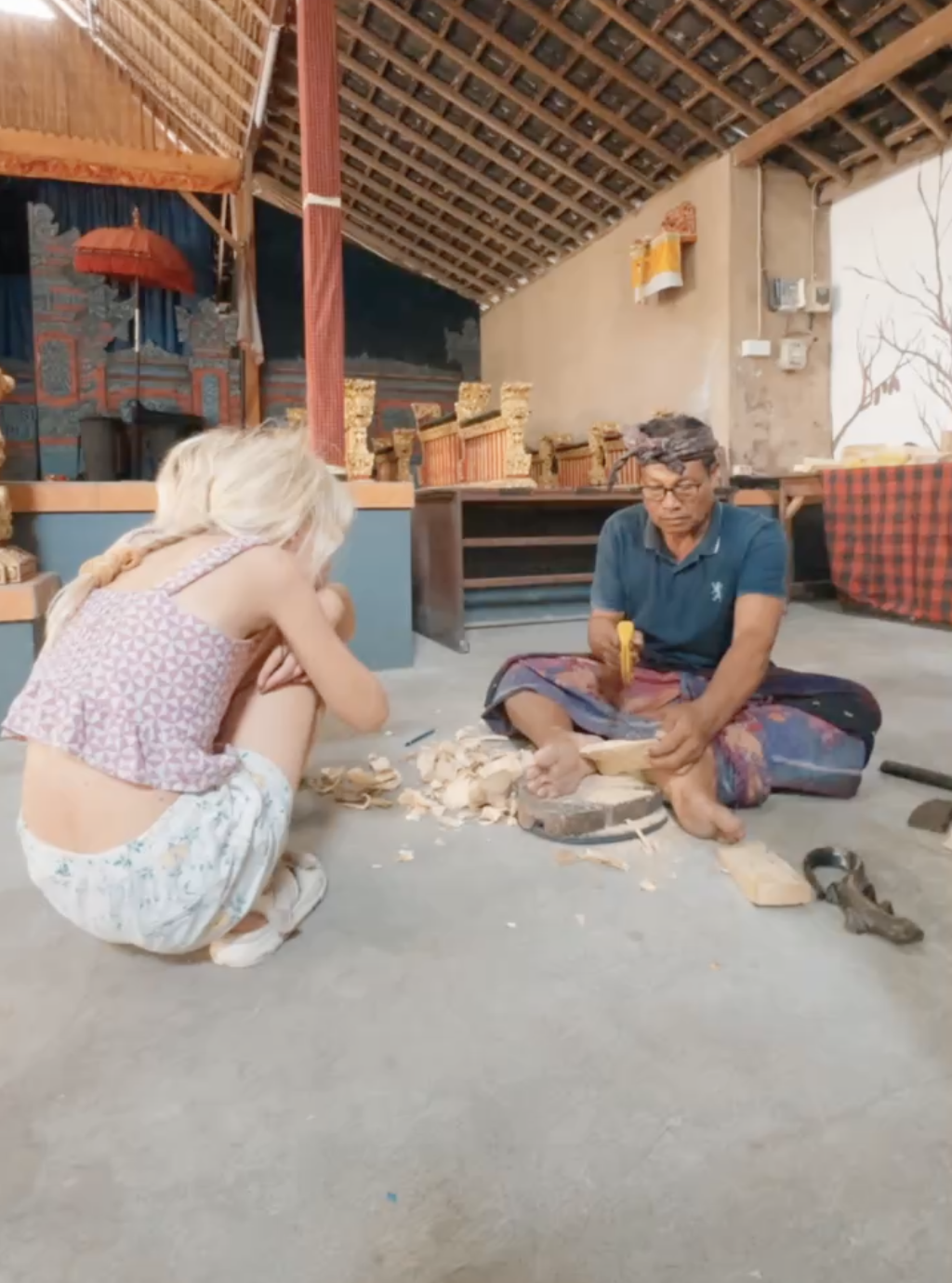
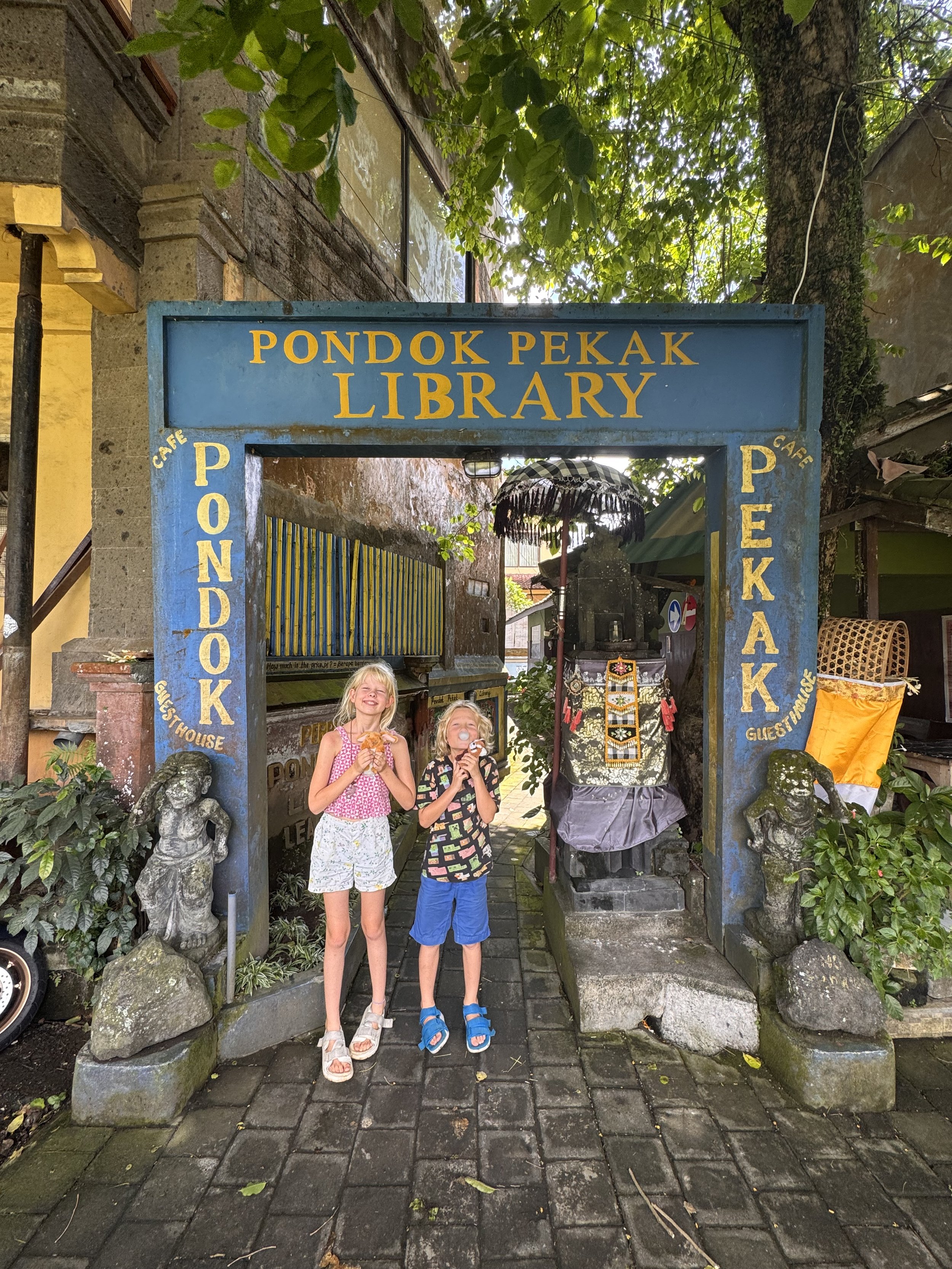
Pondok Pekak Library
He laughed with the kids, trusted them with real tools, showed them how to be careful without being afraid. Despite the language barrier, they understood each other. He talked about the importance of making things with your hands, how proud children become when they create something real. He worried that screens might slowly take that away. It was very moving to watch. The kids were so proud of what they made.
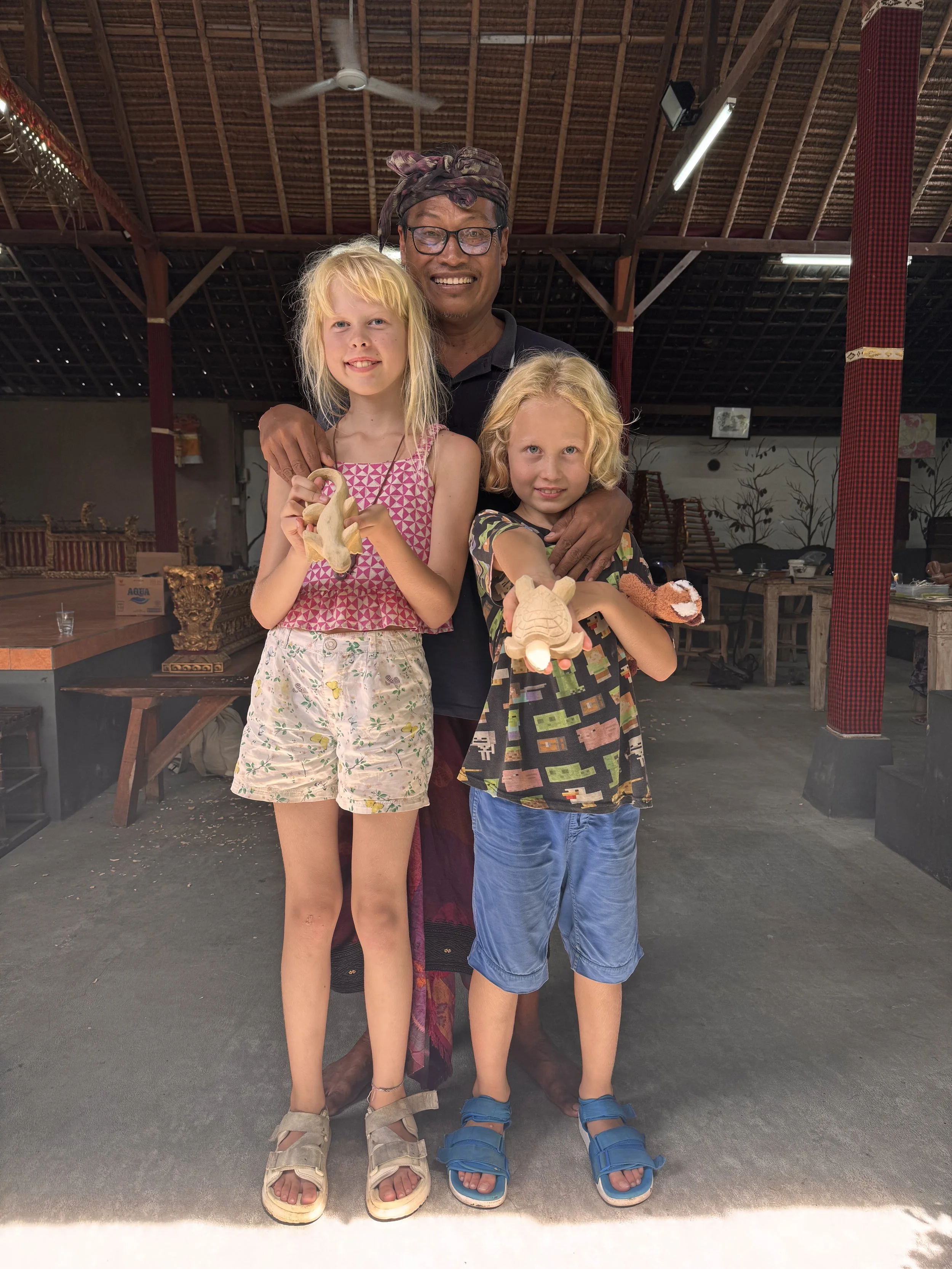
Proud teacher and kids!
The next day we returned to learn about the small offerings placed everywhere. A woman and her grandmother taught us how to weave canang sari from banana leaves and bamboo. We learned what each element meant — flowers for the directions and the gods, rice for life, incense carrying prayers upward, small treats representing balance. It wasn’t complicated, but it felt meaningful. The kids took it very seriously.
When we brought our handmade offerings back to the hotel, they placed them outside the apartment doors the next morning during prayer. Seeing the kids’ small creations there was honestly quite emotional. They were so proud, and so were we.
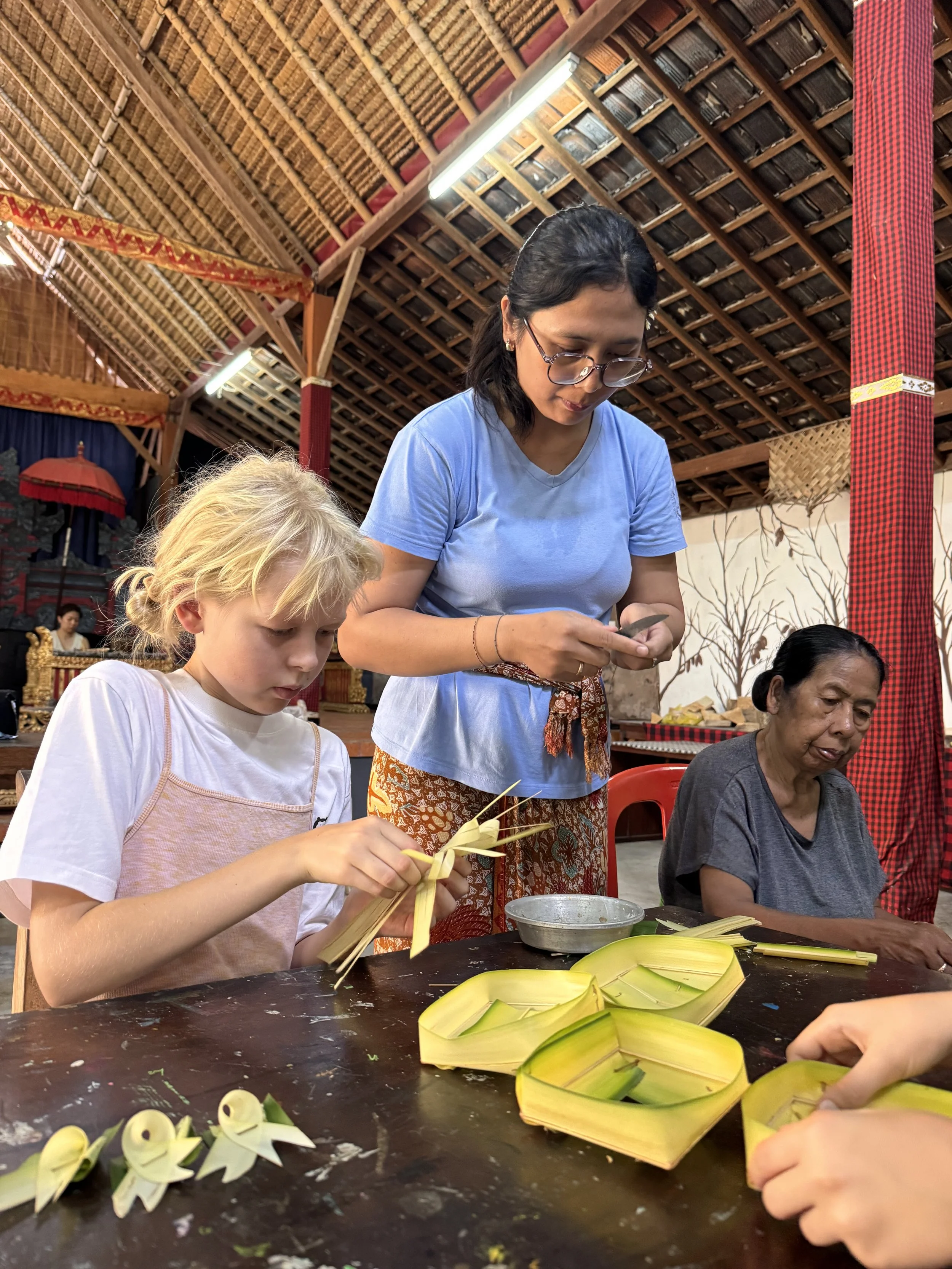
Astrid learned so fast
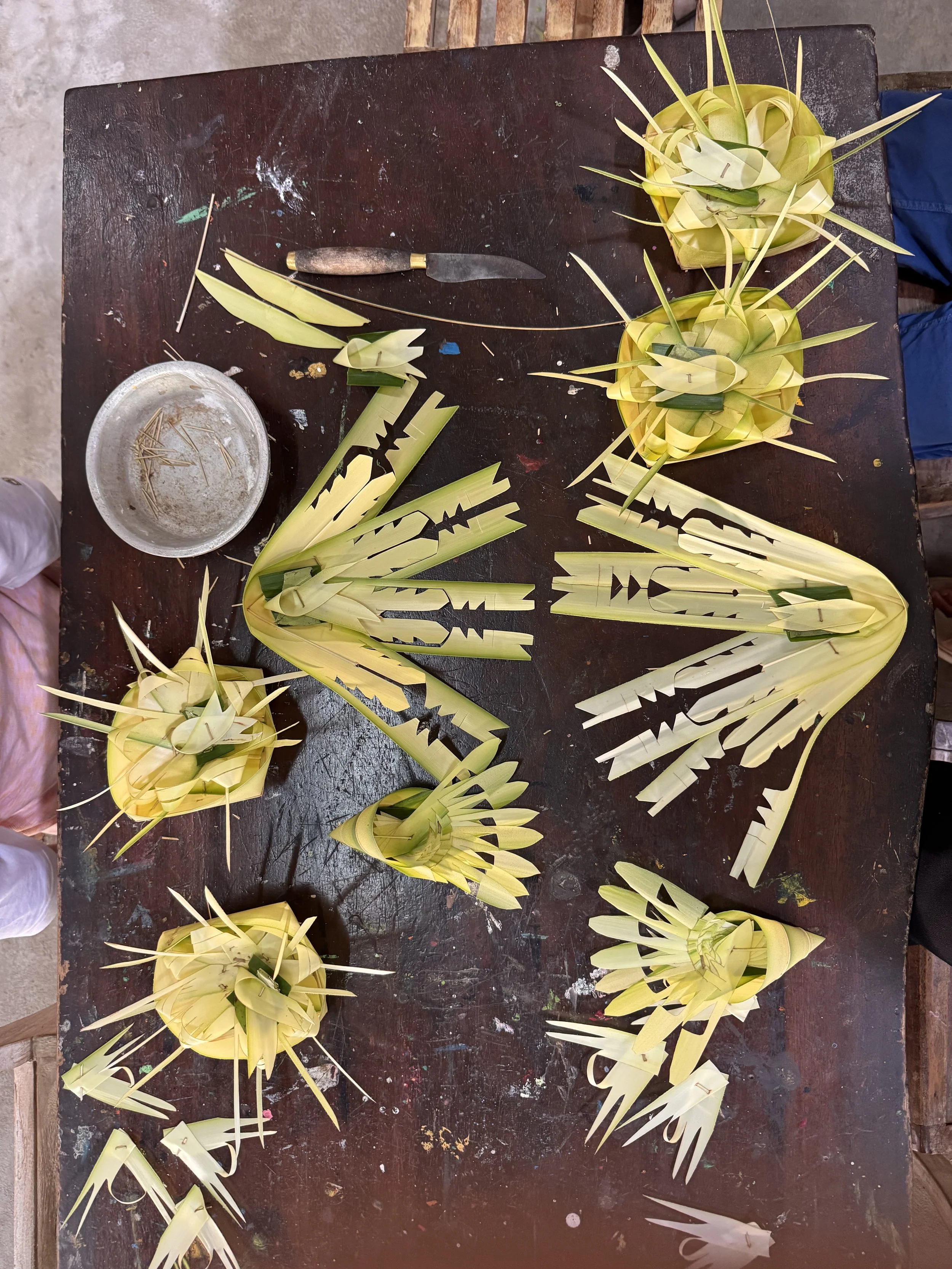
It was not easy. No nails, only bamboo.
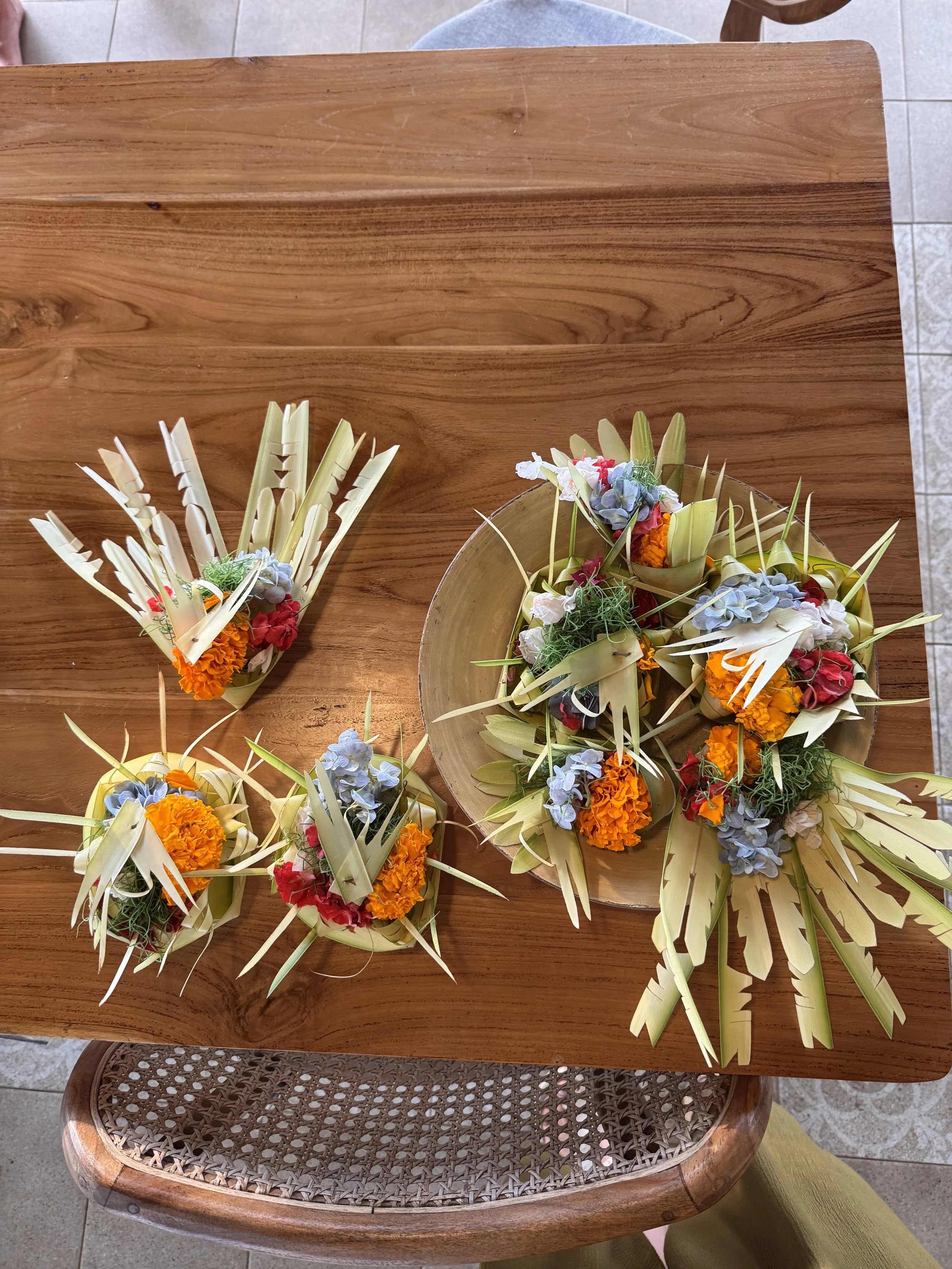
Look at these beautiful Canang Saris
Looking back, those weeks in the valley changed something. Not in a dramatic way — more quietly. Expectations softened. Learning looked different. We spent more time together without rushing. The jungle was loud, messy, beautiful, unpredictable, and somehow it gave us space to figure things out. We would love to experience something like that again.
In the next letter I’ll tell you about when our neighbor Philip came to visit and what perspectives we were left with at the end of our time in Ubud.