
Jeju Island
We weren’t sure if two weeks on Jeju Island would feel too long for us. Jeju is a small volcanic island out in the ocean, far from everything. Some Koreans said yes, and others said no.
It wasn’t. If anything, it felt like too little. We could easily have stayed for months. Speaking for my self, I could have lived here.
From Seoul, we boarded a tiny domestic flight to Jeju. The tickets was so cheap we hardly couldn´t believe it. The only challenge was cutting our luggage from 20 to 15 kilos, which meant one last round of creative packing and saying goodbye to a few things.
When the plane dipped beneath the clouds, we saw volcanic islets rising from the sea like black-green jewels! And when we landed, we felt the shift instantly. This island as a totally different vibe than the mainland for sure. Relaxed, grounded, less polished, but still very beautiful and welcoming. Closer to nature in all ways.
We took a long taxi ride across the island to Seogwipo, our hometown for the next two weeks. It was completely dark, the sea and the volcano invisible beside us the whole time. There’s magic in arriving somewhere you can’t yet see, only knowing that the next morning, everything will unfold.
The morning reveal
When we woke up and opened the curtains in the kids room, the view took our breath away.
Right in front of us stood Hallasan, Jeju’s great volcano! Blue and misty in the morning light, stretching all the way to the sky. And from our bedroom, the ocean shimmered.
Our Airbnb apartment was a cool, colorful gem. Renovated by the architect hosts. It sat in a residential block area, but surrounded by small stone houses with gardens, and citrus trees. Inside, every detail was considered: Scandinavian designer chairs, colorful walls in, and bold splashes of colors; a blue table, red benches and blue kitchen, pink woven wool sofa, beautiful lamps and pictures on the walls and the best part; the most comfortable beds!
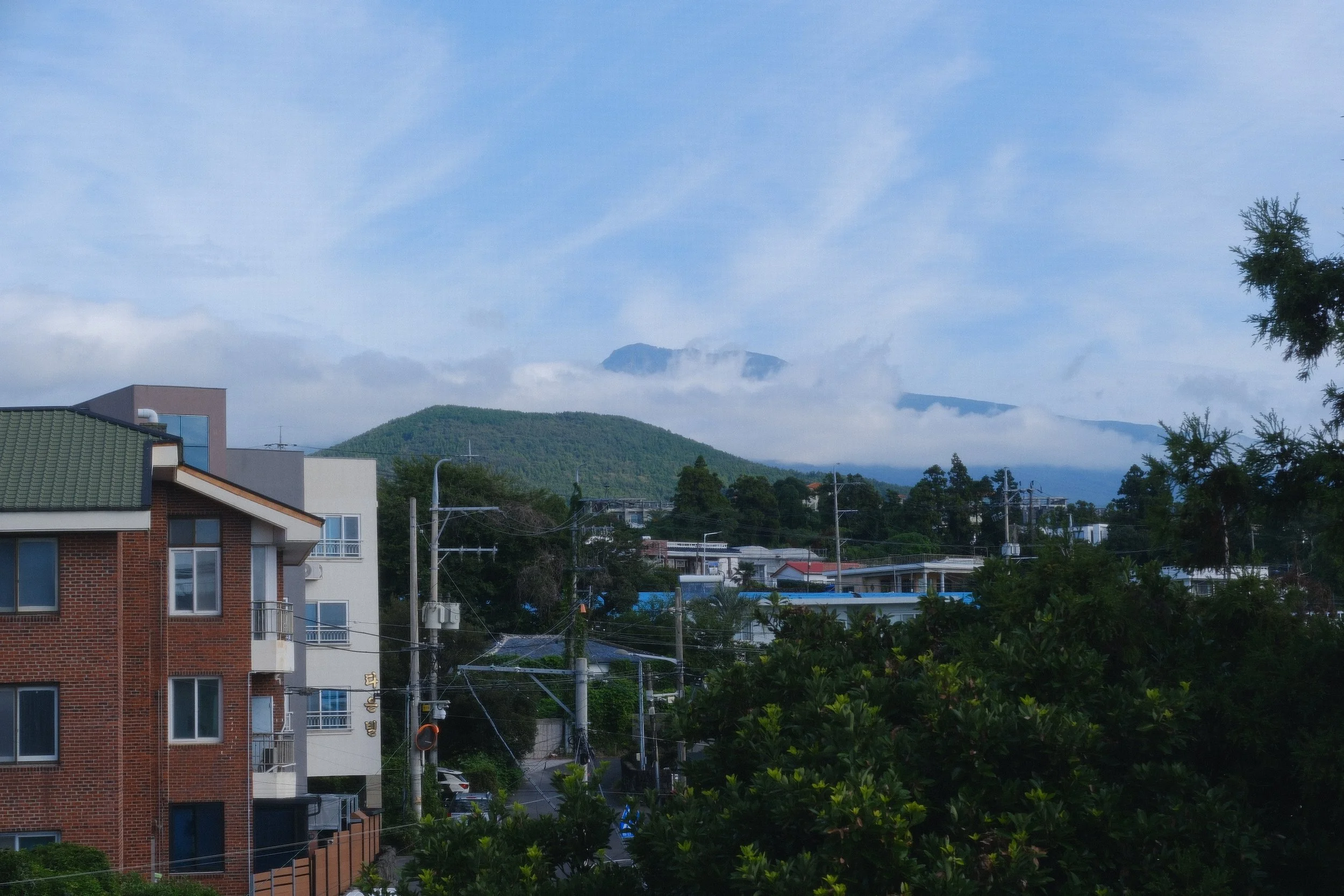
The view from the kids bedroom with Hallasan showing up behind the clouds.
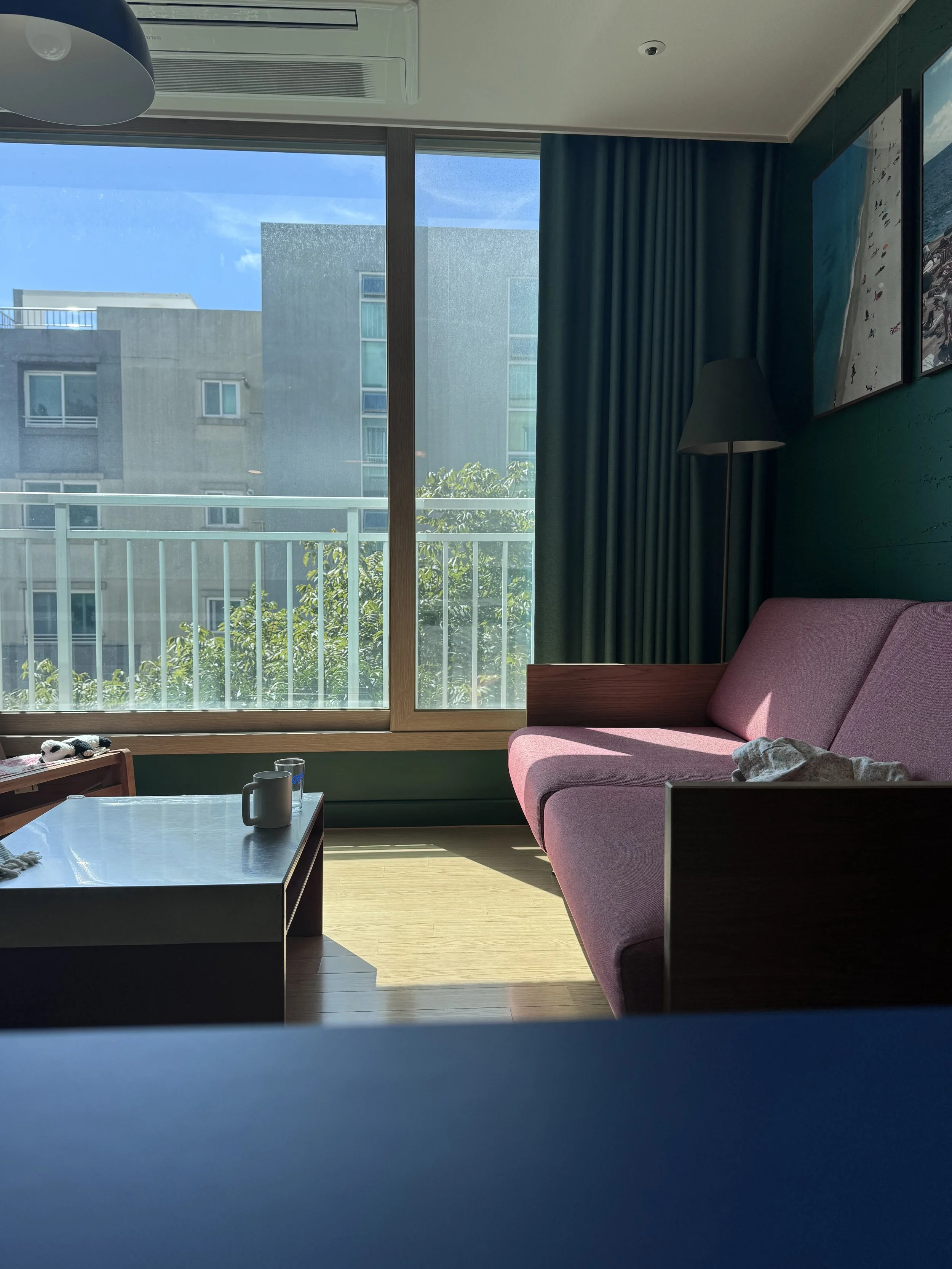
Beautiful light in our living room.
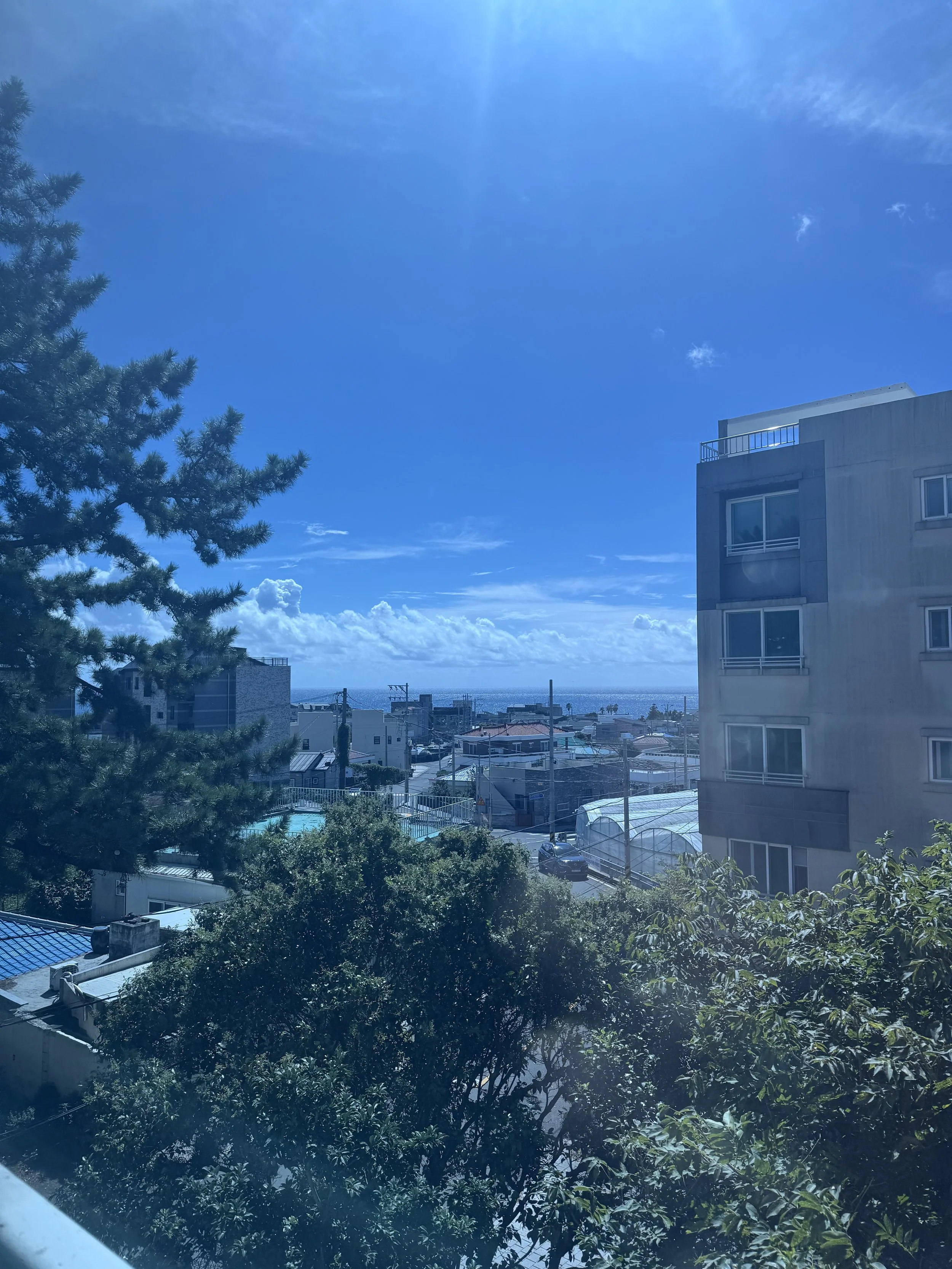
The view from our bedroom.
That morning, as we did our first day ritual; walk around the neighborhood, we found a small, delicate café called Café 903. Named after his father, which sounds like Nine O´three. The owner greeted us with a big smile. He didn’t usually sell coffee beans, but when we asked, he proudly offered a bag roasted in Oslo by Tim Wendelboe!
Norwegian roasted coffeebeans on a volcanic island in Korea?! The world felt suddenly so small and magic.
He was also a photographer who had studied in Paris and even visited Norway. He took beautiful family photos of us that day. From then on, Café 903 became a friendly local hang out place where we later got more friends.
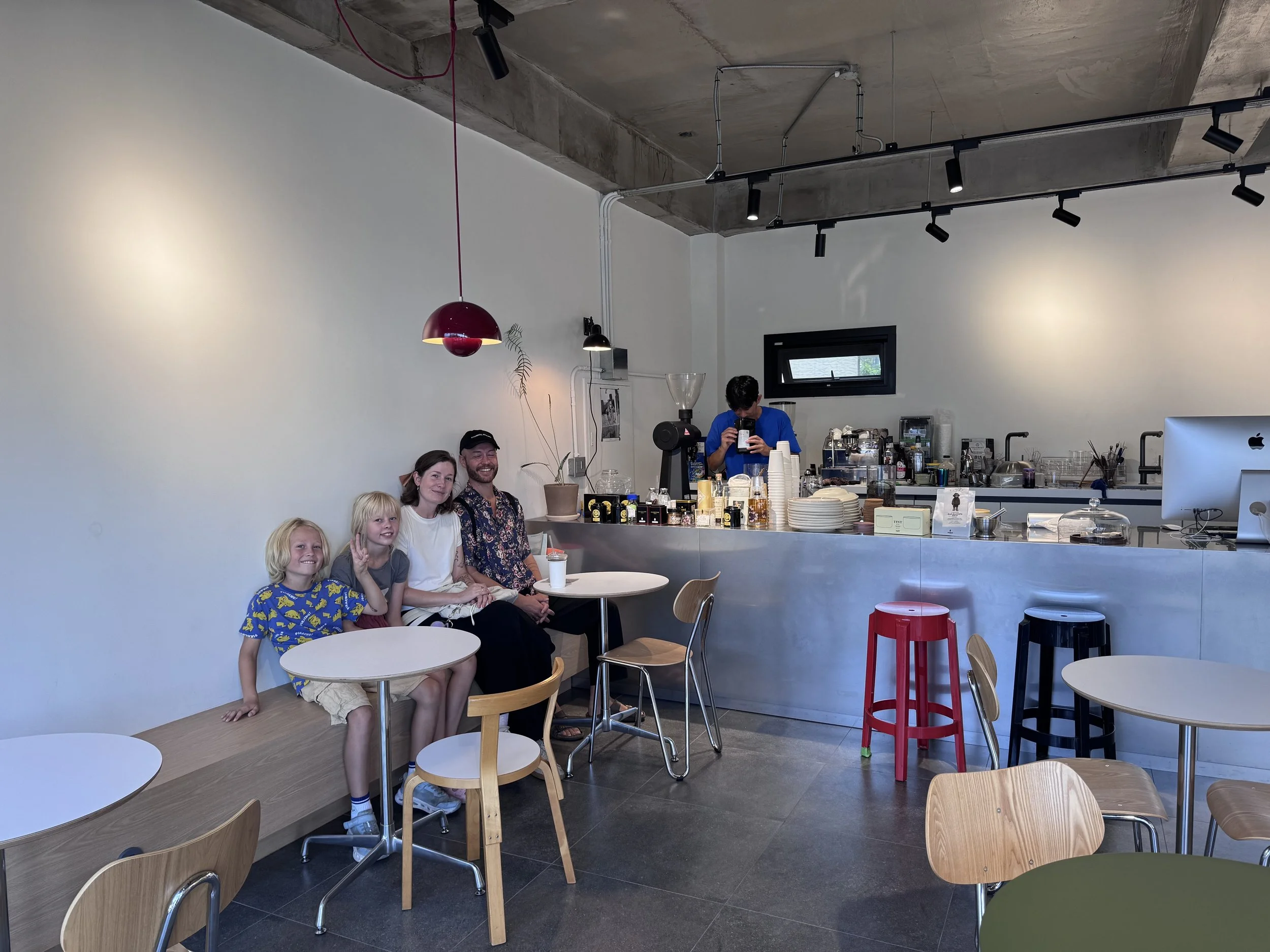
Here we are at Cafe 903, while the kindest barista made the best coffee to us.
Island of lava, grandfathers and clementines
As we explored, we realized Jeju’s soul lives in its stones.
Everything here is made with lava; the quality of the soil, the fences, even the roads. The rocks are black and porous, soft-looking and ancient, many places covered in moss. Between them grow clementine trees, soon to be glowing like little suns. We came right before the tourist season, but they stated to get ripe as while we were there.
We walked for hours through gardens and narrow streets, seeing farmers tend to their trees and gardens; pumpkins, chilies, herbs, flowers. The air smelled of citrus and rain.
We saw stone men everywhere; Dol Hareubang, meaning Stone Grandfather.
Carved from lava rock, they stand with bulging eyes, a closed mouth, a mushroom-shaped hat, and hands on their belly. They’re protectors of Jeju-do (The Korean name for the island), and keepers of fertility, luck, and wisdom. Hannes and Astrid loved them. They are really cute.
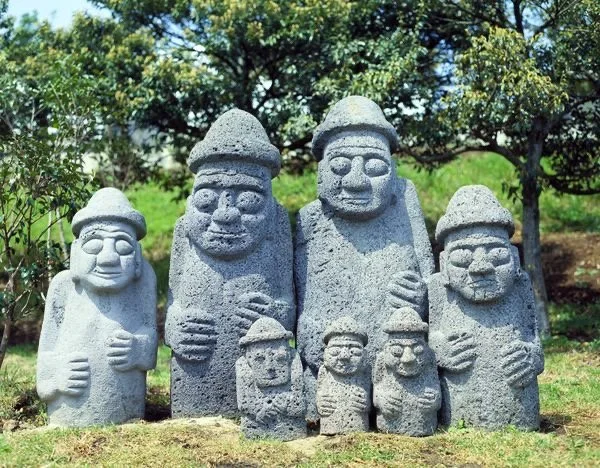
Stone Grandfathers! Or brothers as Astrid and Hannes call them.
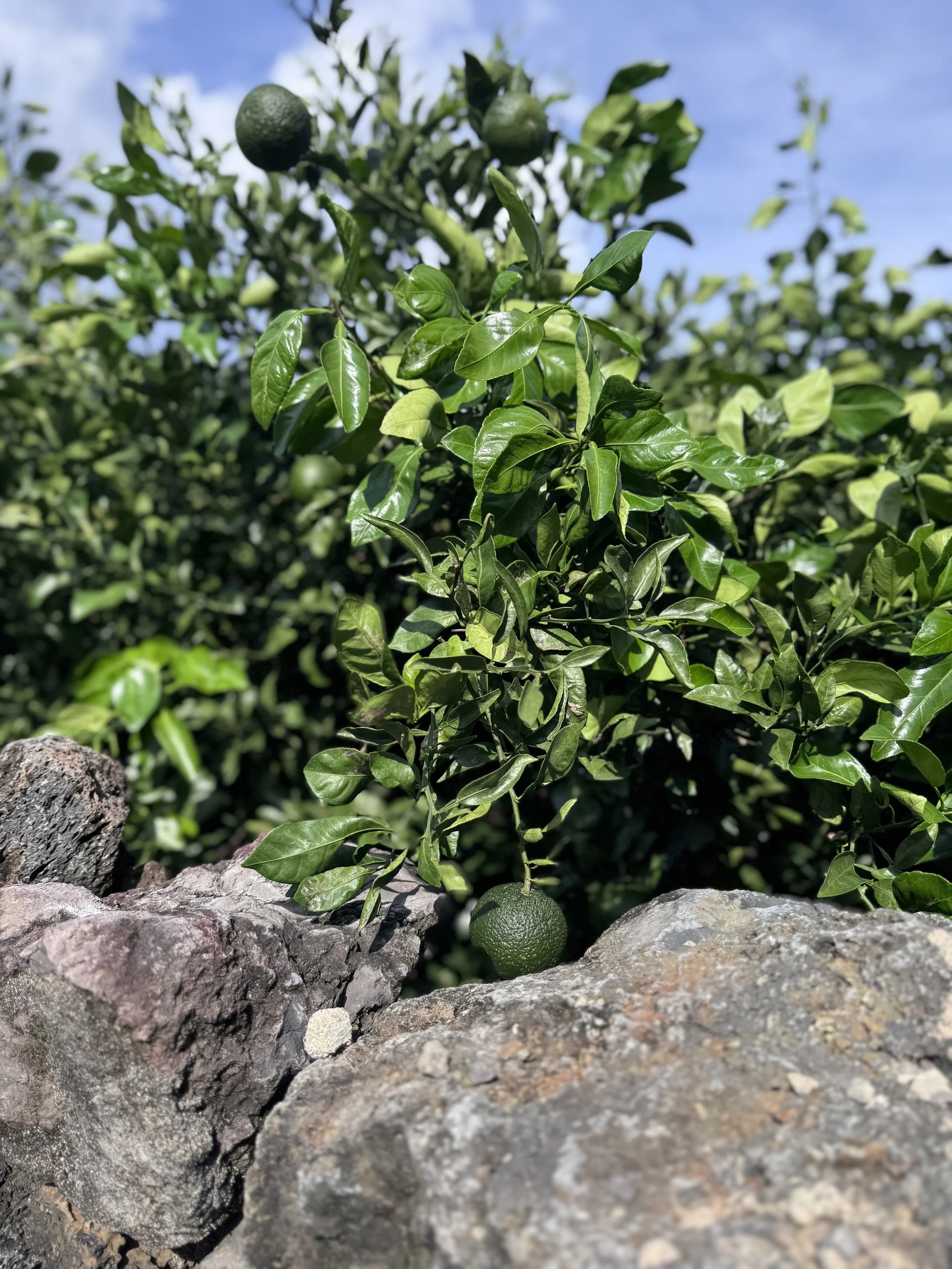
Clementines soon ripe enough to eat! Some are green by nature and taste super delicious.
The women and the sea
Along the coast, we passed the small seaside stations of the Haenyeo, the famous “sea women” of Jeju. We never saw them dive, but we saw where they worked in Seogwipo. Wetsuits hanging to dry on ropes, baskets stacked by the rocks. Practical and strong, shaped by years of salt and wind.
For centuries, these women have been diving without oxygen tanks, collecting seaweed, shellfish, and abalone from the sea floor. Many are over sixty, still working every day. Their lives tell a story about endurance and independence, and about how the island once depended on them.
You should watch this documentary:
https://www.youtube.com/watch?v=VHMngOUUYvc
Someone told us that Jeju is known for its three abundances: women, wind, and stones. The men were often away fishing for months at a time, so the women managed both the land and the sea.
People also say that Jeju has more women and clementines than anything else.
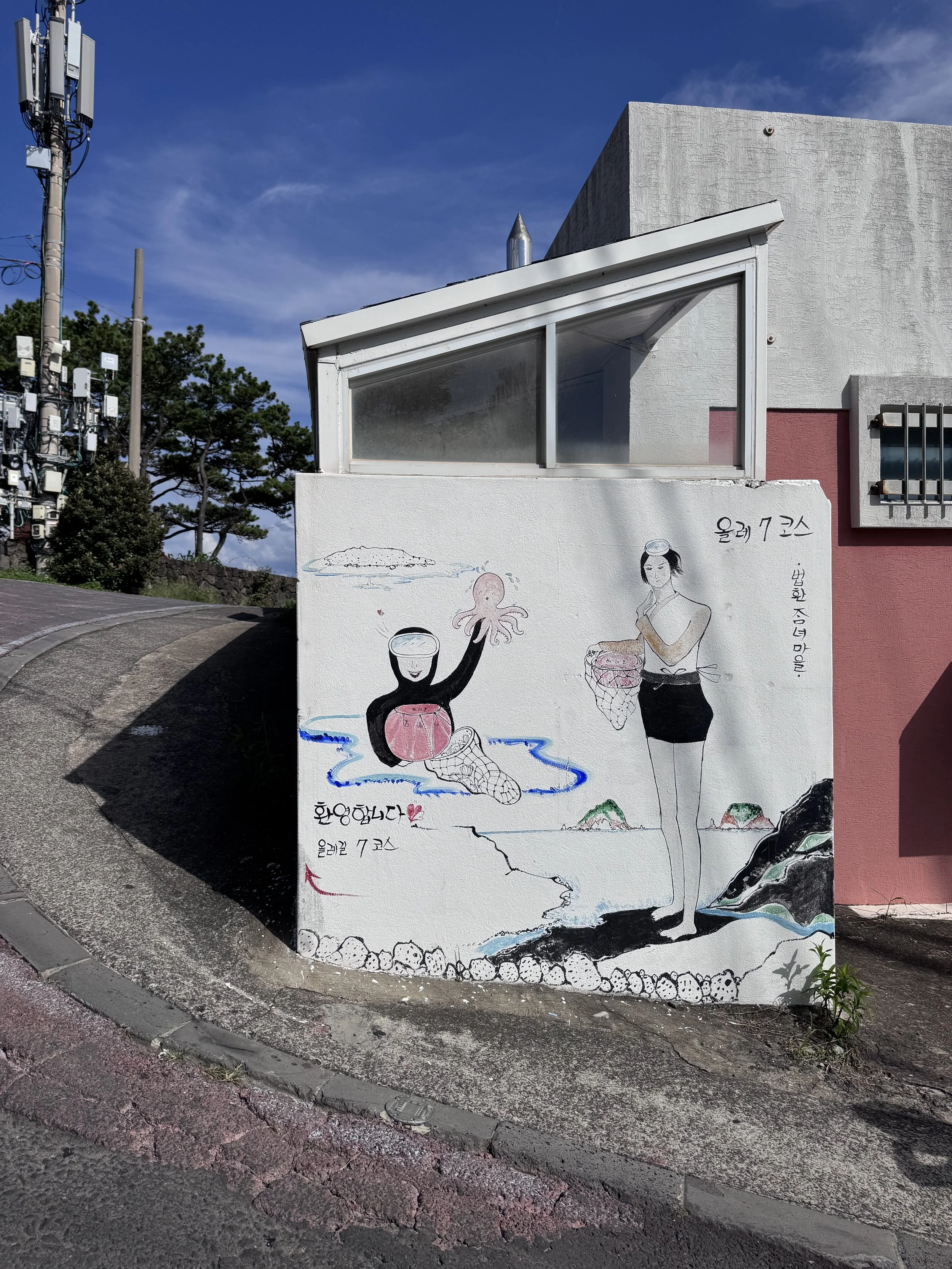
Wall paintings of Haenyeo women outside one of their stations.
Well, we meet again, Emperor Chi!
One afternoon, while wandering through Seogwipo to see a mighty waterfall, we stumbled upon a small exhibition!
It was an exhibition about Emperor Chi, the same famous Emperor I had written and told stories about for the children when we were in Xi’an. The emperor obsessed with immortality and the elixir of eternal life. Whom unified China and the reason why China has it’s name.
And here he was again, on Jeju Island.
In my China book Midtens rike by Torbjørn Færøvik, he writes about the emperor’s search for immortality, sailing everywhere to find it. I’m a bit of a history nerd, so I actually laughed out loud when I saw the statue of the emperor Chi standing there, finally having found his elixir.
In the exhibition, there were actual Terracotta Warriors on display! Real ones, lent from China for this rare event. We had skipped the Terracotta Army when we were in Xi’an, and yet here they stood waiting for us. Yey!!
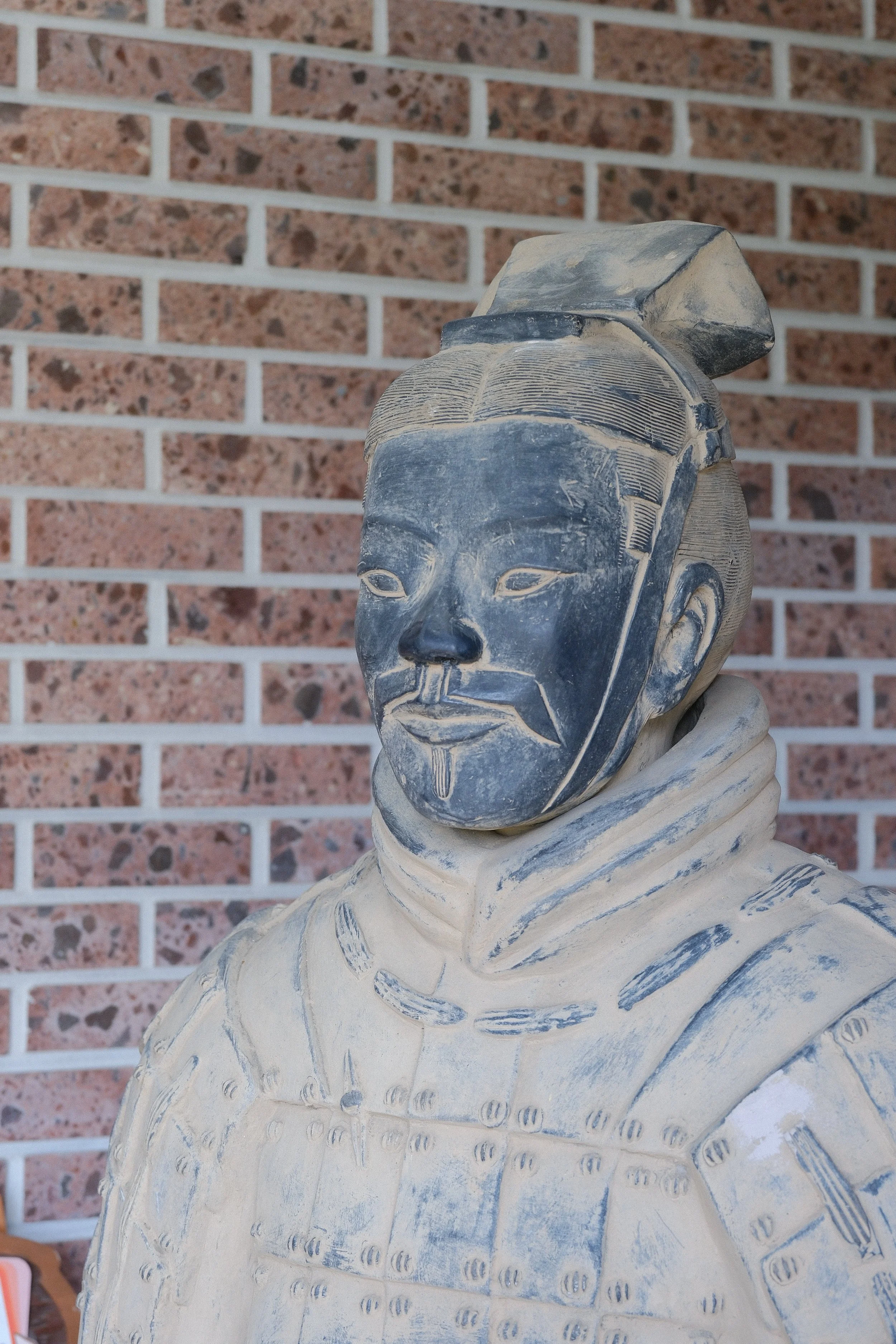
A terra cotta warrior on Jeju.
The island’s storms
During the week, Hannes got a small wound that kept getting worse each day. It didn’t look good at all, and we finally decided to see a doctor. I remember feeling a bit worried — being so far from home, not knowing how things worked here, wondering if the antibiotics would help, if it was the same kind, the same strength.
The doctor confirmed Streptococcus and prescribed treatment right away. Hannes was brave, but I could tell he was scared too. It felt good to take care of him, to hold him, and to see how much he cared about his own body, how he didn’t want to be sick. Each day, the wound looked a little better, a little less red, a little less painful.
By the end of the week, it was healing beautifully, and what a great relief it was for him, and all of us.
Then came the thunderstorms.
We have never seen lightning like that! Flashing purple and white over the sea, shaking the entire apartment so hard. It was wild, powerful, cleansing and we felt so small. We all slept in the same bedroom that evening.
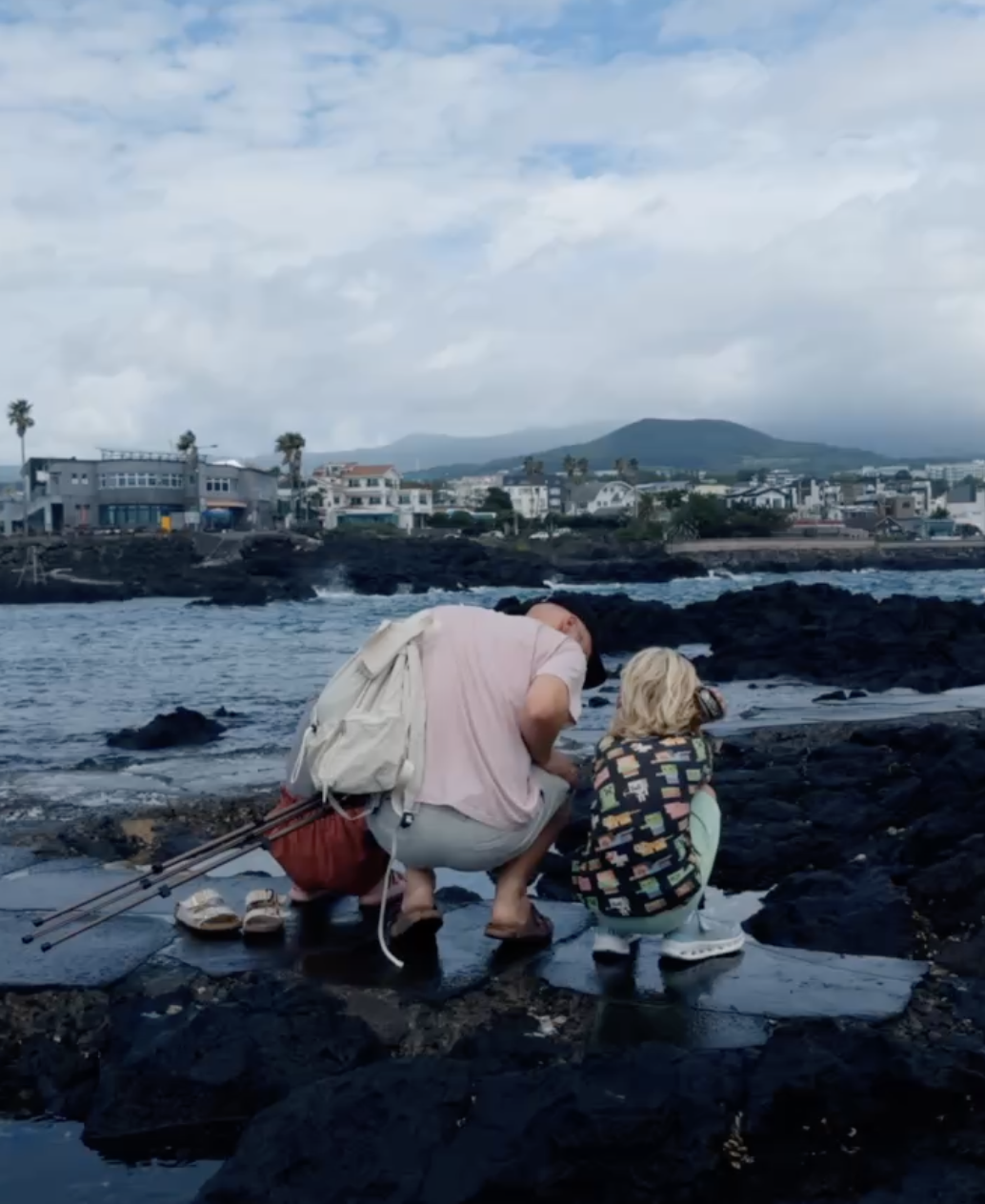
Deep emotional support when the inner storms are strong.
What the volcano brought to the surface
Jeju stirred deep in all of us. There was homesickness, imbalance, and friction.
We argued more. We felt trapped in our roles.
I’m with the children from morning until night, teaching, guiding, organizing, and sometimes feeling like I had lost a part of myself in the constant responsibility. Bjarne carried his own weight, the pressure of being the provider, working alone in a room while life unfolded around him. And the children who has no one else to play with, no friends to run off with, no schoolyard, just us.
It brought things to the surface we hadn’t seen before.
Grief. Restlessness. unaligned, questions about meaning with this whole journey.
I found myself wondering what this adventure was really about, the deeper spiritual principle behind it. What is life showing me through this? What am I supposed to learn from being so exposed, so far from my routines, without a job title or a clear purpose? There were moments when I felt small, even inadequate, because I wasn’t earning money, because I didn’t have a defined role to return to.
All of that came up here. And perhaps that’s exactly what a volcanic island does. It pushes things to the surface; the old, the buried, the uncomfortable, until it can release.
The sea was part of it too.
It moved everything, both inside and around us. We went to wild beaches with enormous waves, watching surfers play with the ocean’s power — learning from them is a strong teaching. A surfer doesn’t fight the waves. They ride them. They find balance instead of resistance.
The great lesson of Jeju: release and ride the waves. To let the sea and the fire move through us, transform us. To allow everything that had been stuck to shake loose.
It was raw, intense, and deeply healing.
On fall equinox we made a stone mandala by the shore to give thanks to each other, to nature and to our self in silence.
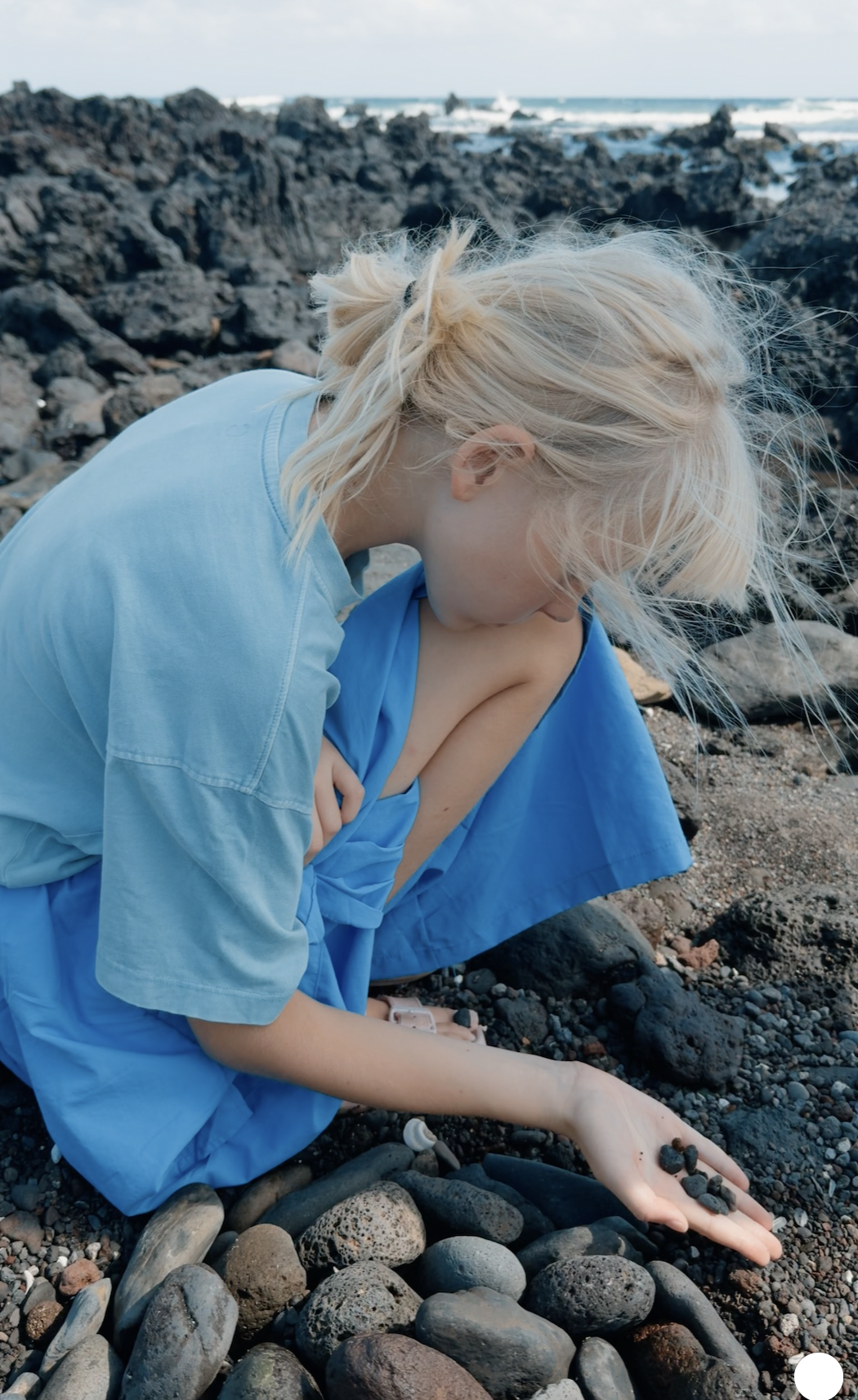
Fall equinox, a time for refection.
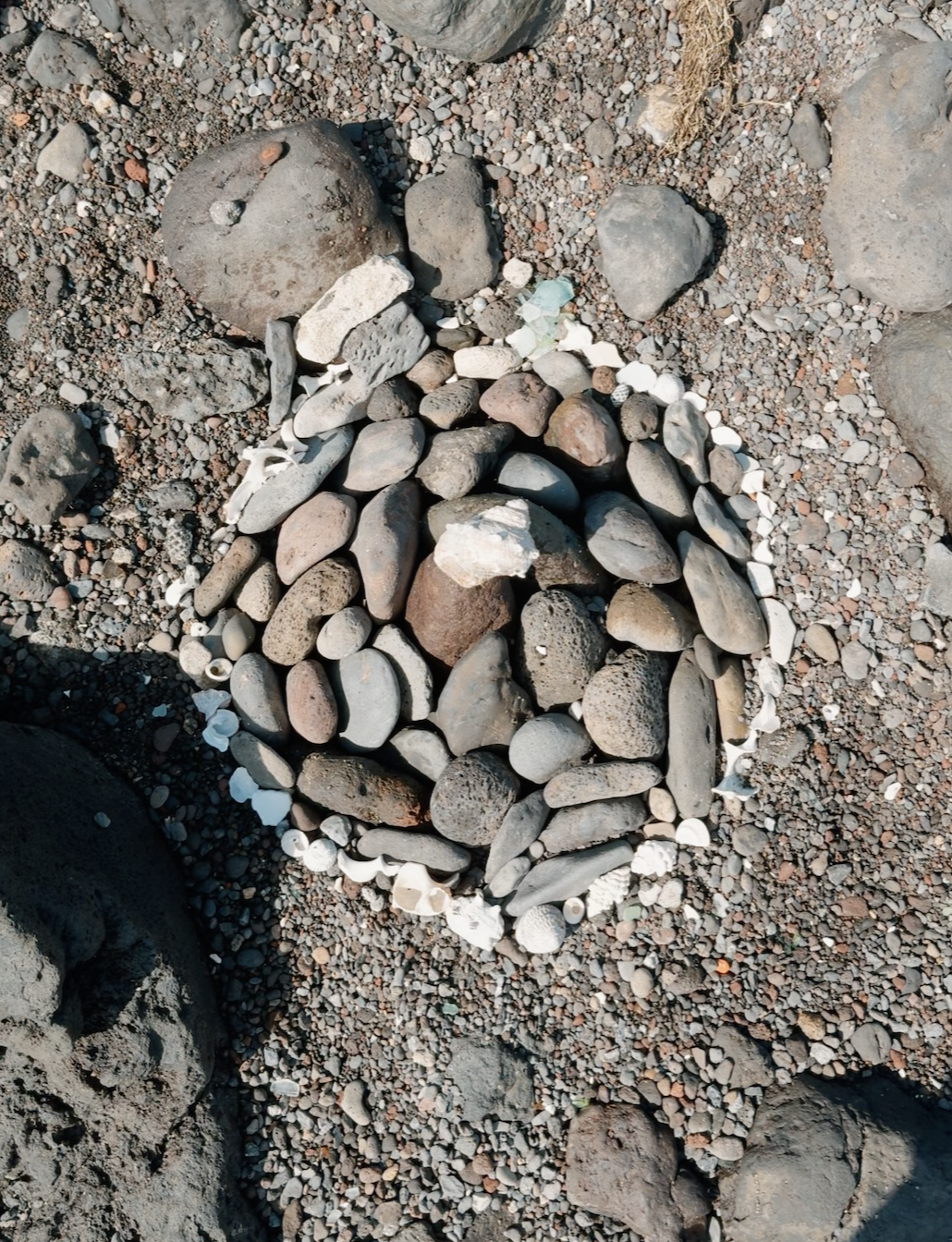
The Flur family’s stone mandala.
My birthday!
As our last days came, the outer and inner storms cleared. The air felt light again, full of citrus and salt.
On our final morning, my 37th birthday, we left the island before sunrise.
Jeju had cracked us open and put us back together. It had taught us to slow down, to listen, to live open and be humble between fire and sea.
And as the plane lifted off, leaving the black cliffs and turquoise water behind, I was so thankful. Because on my birthday, we were flying to Bali.